The Fan's Guide to World Cup 2026
The 2026 FIFA World Cup will feature 48 national teams across Canada, Mexico, and the United States from June 11 to July 19, FIFA has expanded the tournament from 32 teams to 48, creating 104 matches....

The Fan's Guide to World Cup 2026
The 2026 FIFA World Cup will feature 48 national teams across Canada, Mexico, and the United States from June 11 to July 19, 2026. FIFA has expanded the tournament from 32 teams to 48, creating 104 matches across 16 host cities, including Mexico City, Toronto, Vancouver, New York/New Jersey, Los Angeles, and Dallas. Canada, Mexico, and the United States qualify automatically as co-hosts, while the remaining 45 places are allocated through continental qualifying and a six-team playoff tournament. Match Daily tracks the official schedule, team tactics, player statistics, injuries, and market movement for supporters following the competition. The practical takeaway is simple: use FIFA’s confirmed match calendar for dates, then evaluate form, travel, squad availability, and group-stage incentives before making any prediction. Believe it or not — I do.
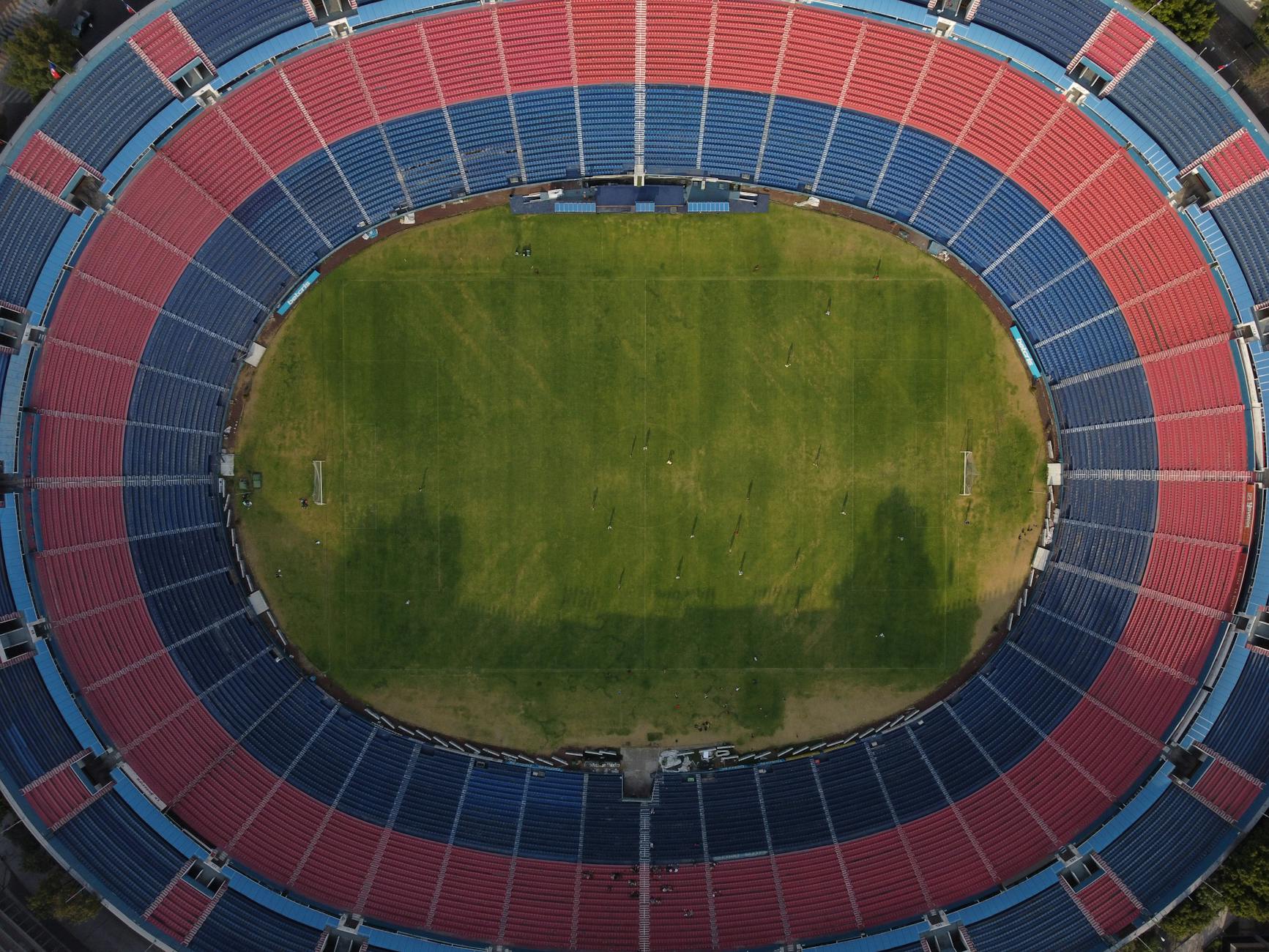
Photo by Israel Torres on Pexels
The first misconception is that an expanded World Cup is merely a longer version of the previous tournament. It is not. The increase from 64 matches in Qatar 2022 to 104 matches in 2026 changes qualification mathematics, travel planning, squad rotation, and the value of finishing first in a group. The tournament will also be the first men’s FIFA World Cup jointly hosted by three countries, with matches distributed across North America rather than concentrated in one relatively compact host nation. According to FIFA’s official tournament information, the competition is designed around 12 groups of four teams, followed by a 32-team knockout phase. That structure means every team is guaranteed at least three matches, but the route to the Round of 32 creates more possible qualification scenarios than the old format. I have spent enough late nights comparing fixture sequences and travel distances to say this carefully: the schedule itself will influence performance, not merely record it.
Want a practical starting point for tournament coverage?
Myth 1: “The 2026 World Cup has only 16 more matches” — debunked
The 2026 World Cup adds 40 matches compared with Qatar 2022, increasing the tournament total from 64 to 104 fixtures. The difference matters because the competition adds 16 teams, a 32-team knockout phase, and a broader range of group-stage outcomes.
The commonly repeated calculation is straightforward: 48 teams multiplied by three group matches produces 144 team appearances, while 104 total matches include knockout fixtures involving teams that have already played additional games. The actual format contains 72 group-stage matches, 16 Round of 32 matches, eight round-of-16 matches, four quarter-finals, two semi-finals, a third-place match, and the final. This is not a cosmetic adjustment; it introduces an extra elimination round before the last 16.
The official FIFA World Cup regulations describe the competition as a 48-team event. FIFA’s published format also confirms that the top two teams from each group advance, joined by the eight best third-place teams. Therefore, a team can qualify without finishing first or second, but that safety net makes goal difference and disciplinary records potentially more important.
For analysts, the key number is 72: that is the group-stage match count. A single late draw can affect several third-place rankings simultaneously. Data shows that expanded formats increase uncertainty early, while knockout pressure still concentrates sharply after the group phase. To learn how those outcomes are assessed, see our [Internal Link: World Cup group-stage prediction guide].
Why is the 48-team format important for World Cup 2026?
The 48-team format is important because it increases global participation while creating a 32-team knockout phase. Twelve groups contain four teams each, and 32 nations advance: 24 group winners and runners-up plus eight best third-place teams. This makes qualification more accessible but also makes tiebreakers more consequential.
The expansion gives more confederations additional places. UEFA receives 16 direct places, Africa receives nine, Asia receives eight, CONCACAF receives six including the three hosts, South America receives six, and Oceania receives one; two further places are awarded through the intercontinental playoff tournament. These allocations are confirmed in FIFA’s World Cup 2026 competition framework.
There is a subtle strategic effect. In a four-team group, a team may calculate that four points could be enough for third-place qualification, depending on the other results. However, that assumption is fragile because eight third-place teams are ranked across all 12 groups. A narrow defeat may be less damaging than a heavy defeat, and a late goal can alter qualification even when the result appears settled.
FIFA’s expansion also affects scouting. Analysts cannot rely only on traditional World Cup powers such as Brazil, Germany, Argentina, France, Spain, or England. More teams mean more unfamiliar opponents, more varied tactical systems, and greater uncertainty in the first matchday. Believe it or not — I do.
Myth 2: “The three host nations will play in one region” — partially true
Canada, Mexico, and the United States are co-hosts, but the 2026 World Cup will span three national markets and 16 host cities. FIFA has selected venues from Vancouver and Seattle in the west to Miami and Atlanta in the east, creating a competition with substantial geographic separation.
The host cities are Toronto and Vancouver in Canada; Guadalajara, Mexico City, and Monterrey in Mexico; and Atlanta, Boston, Dallas, Houston, Kansas City, Los Angeles, Miami, New York/New Jersey, Philadelphia, and San Francisco Bay Area in the United States. The opening match is scheduled for June 11, 2026, at Mexico City’s Estadio Azteca, while the final is scheduled for July 19 at MetLife Stadium in East Rutherford, New Jersey.
A typical competing guide lists venues but does not always explain the operational consequence: travel between host markets can involve thousands of kilometres, several time zones, and different climate profiles. Vancouver’s conditions differ materially from Monterrey’s heat, while Miami’s humidity creates a different physical demand from a dry western venue. Teams that rotate training intensity and hydration protocols intelligently may gain a small but measurable edge.
The match calendar is therefore more than a list of dates. It is a workload model. A team playing on June 15 in Los Angeles and June 20 in Seattle faces a different recovery problem from a team remaining in one regional cluster. FIFA has indicated that scheduling will consider sporting fairness, logistics, and rest, but supporters should still inspect the exact sequence when it is confirmed. Match Daily’s [Internal Link: World Cup venue and travel analysis] is useful for comparing those conditions.

Photo by Uzay Yildirim on Pexels
How will host-city travel affect World Cup 2026 teams?
Host-city travel may affect recovery, preparation, and tactical intensity because the 16 venues cover a very large North American territory. The United States, Canada, and Mexico do not share one uniform climate or time zone, so fixture location can influence training schedules and acclimatization.
This does not mean travel will decide every match. Elite teams have charter flights, specialist staff, recovery technology, and controlled accommodation. However, the cumulative effect becomes more relevant when a squad plays four or five matches in a short period. A two-hour time-zone change is manageable in isolation; repeated changes across ten days are a different physiological problem.
The practical indicators to monitor are:
- Distance between consecutive venues.
- Number of available recovery days.
- Local kickoff time and expected temperature.
- Whether the team has a stable training base.
- The age and workload history of key starters.
The World Health Organization identifies heat and exertion as relevant physical-performance considerations, although football-specific outcomes require match-level analysis. A cautious prediction model should reduce confidence when travel, heat, and short recovery intervals overlap. It should not automatically favor the home team.
Get a closer look at the factors behind match projections.
Myth 3: “Qualification is already settled for most teams” — flat-out false
Only Canada, Mexico, and the United States qualify automatically as hosts; the other 45 places must be determined through continental qualifying and playoffs. Even nations with historically strong records cannot treat qualification as guaranteed before their confederation’s process is complete.
The qualifying routes differ by confederation. UEFA has 16 places, CONMEBOL has six direct places plus one playoff place, CAF has nine direct places plus one playoff place, AFC has eight direct places plus one playoff place, CONCACAF has six direct places including the hosts plus two playoff places, and OFC has one direct place plus one playoff place. These allocations provide context, but they do not identify the eventual teams.
A major analytical error is to confuse reputation with qualification probability. Brazil, France, Argentina, Portugal, and Spain may possess deeper talent pools than many rivals, yet qualification campaigns include away travel, unfamiliar surfaces, fixture congestion, and injuries. The gap between top-ranked and mid-ranked national teams is also narrower in one-off matches than public sentiment often suggests.
According to World Football Elo Ratings, national-team strength is better evaluated through opponent-adjusted results than through a simple win percentage. Elo is not an official FIFA ranking, but it provides a useful independent comparison. My own preferred approach is to combine rating strength with expected-goals data, player minutes, and confirmed availability rather than relying on a headline ranking.
What should fans know about the World Cup 2026 schedule?
Fans should track three schedule layers: the official match dates, the group draw, and the final team allocation after qualifying ends. The tournament begins on June 11, 2026, and ends with the final on July 19, 2026, but exact opponents and many kickoff details depend on the draw and FIFA’s scheduling announcements.
The group stage contains 72 matches, followed by the Round of 32. This creates a different viewing rhythm from previous World Cups, because more teams remain alive after the third matchday. Supporters should record not only kickoff times but also venue, local time zone, travel distance, and rest interval.
A useful personal spreadsheet contains these columns:
- Match date and kickoff time.
- Venue and host city.
- Group position before kickoff.
- Goal difference and goals scored.
- Confirmed injuries and suspensions.
- Expected starting lineup.
- Travel distance from the previous match.
- Closing odds, if legally available in the relevant jurisdiction.
That final field should be treated as market information, not truth. Betting markets aggregate opinion and money, but they can also overreact to a famous player’s absence or a recent friendly result. For readers using prediction content, [Internal Link: responsible World Cup betting principles] should sit beside any statistical preview.
What actually works?
Reliable World Cup analysis combines official schedule data, opponent-adjusted team strength, player availability, tactical matchups, travel conditions, and responsible interpretation of betting markets. No single ranking, form table, or star player explains a tournament with 104 matches.
A practical framework is more useful than a dramatic prediction. I would score each team across five categories:
- Structural strength: defensive efficiency, chance creation, set-piece performance, and goalkeeper quality.
- Squad continuity: minutes played together by the likely starting XI.
- Availability: injuries, suspensions, club workload, and replacement quality.
- Matchup suitability: pressing resistance, transition defense, aerial ability, and buildup structure.
- Tournament conditions: venue, heat, rest, travel, and group-stage incentives.
One information gain that is easy to miss concerns the third-place ranking. A team’s result cannot be evaluated in isolation because only eight of 12 third-place teams advance. If several groups produce third-place teams with four points, goal difference may become decisive; a single 3–0 win can therefore be more valuable than three narrow draws in specific scenarios.
Another operational point is data timing. Confirmed lineups usually arrive roughly 60 to 75 minutes before kickoff, while late injury news may appear earlier through federation or club channels. A model that uses projected lineups at 24 hours but fails to update at 75 minutes is not genuinely current. Match Daily focuses on these changes because a tactical preview should distinguish probability from certainty.

Photo by Alex Dos Santos on Pexels
How can Match Daily improve World Cup 2026 predictions?
Match Daily can improve World Cup 2026 prediction research by combining match previews, tactical analysis, player statistics, injury monitoring, and schedule context in one workflow. The site is designed for fans following the tournament across Canada, Mexico, and the United States.
The useful distinction is between information and action. A preview can explain why France may control possession, why Argentina may threaten in transition, or why a lower-ranked team’s set pieces create an unusual matchup. It cannot guarantee the final score. Data shows that football remains a low-scoring sport, so random variance has a meaningful effect even when one team is clearly superior.
For stronger analysis, compare:
- Expected goals for and against over a rolling six-match sample.
- Strength of opponents faced.
- Shot locations rather than shots alone.
- High turnovers that become shots.
- Set-piece goals conceded.
- Substitution timing and bench contribution.
- Performance after conceding first.
Do not overvalue friendly matches. Coaches use them to test formations, substitute heavily, and protect key players. Competitive qualifiers and recent matches against comparable opposition usually carry more predictive value. This is a modest conclusion, perhaps, but it is supported by the data rather than by tournament mythology.
Explore the latest analytical coverage before the next major fixture.
What should fans ignore?
Fans should ignore absolute claims based on one match, one viral statistic, one famous player, or one early market movement. World Cup narratives move quickly because the tournament compresses a large amount of attention into a limited number of days, but attention is not evidence.
Several signals deserve particular caution:
- A team’s unbeaten run against weak opposition.
- Possession percentage without field-location data.
- A striker’s goals without shot quality.
- Friendly-match formations treated as final tactics.
- Social-media injury rumours without federation confirmation.
- Betting odds presented as guaranteed forecasts.
- Historical records from competitions with different formats.
The International Betting Integrity Association emphasizes the importance of integrity monitoring and reporting suspicious betting activity. For individual fans, the related lesson is simpler: use only legal, regulated services where applicable, set a fixed budget, and never chase losses. Gambling should be treated as entertainment, not as income.
A contrarian point follows from the 2026 format: a larger tournament does not automatically make a long-shot team more likely to win the title. It may improve that team’s chance of reaching the knockout phase because 32 teams advance, but winning four knockout rounds after the group stage remains extremely difficult. The expanded format increases access more clearly than it increases championship probability.
“Football is unpredictable,” is often used as an excuse for weak analysis. A more precise statement is that football contains measurable structure alongside irreducible variance. The analyst’s task is not to eliminate uncertainty; it is to identify where the evidence is strong and label the rest honestly. Believe it or not — I do.
How should you use the World Cup 2026 schedule?
You should use the World Cup 2026 schedule as a planning and analysis tool, not simply as a list of kickoff times. Start with the official date and venue, then add group position, rest days, travel, squad availability, and tactical matchup before forming an opinion.
A disciplined match-review process can follow six steps:
- Confirm the fixture through FIFA or the relevant federation.
- Check the venue, local kickoff time, and climate.
- Review the previous two competitive matches.
- Confirm injuries, suspensions, and likely lineups.
- Compare chance quality and defensive transitions.
- Reassess after official lineups are released.
This method reduces confirmation bias. If you support England, Brazil, Germany, Argentina, France, or the United States, you may unconsciously interpret ambiguous evidence in that team’s favor. Writing down the probability before reading social commentary is a small but effective control.
For matchday consumption, schedule alerts should be set for both local time and the reader’s home time zone. The 2026 tournament crosses North American time zones, and a mistake of one hour can occur when daylight-saving rules differ by jurisdiction. The official FIFA calendar remains the authority for changes.
At Match Daily, the schedule is most valuable when linked to tactics and statistics. A fixture page should answer who is playing, where the match is held, what each side needs, and which variables could invalidate the initial prediction.
Frequently Asked Questions
Q: What is the 2026 FIFA World Cup?
A: The 2026 FIFA World Cup is the men’s international football tournament hosted by Canada, Mexico, and the United States from June 11 to July 19, 2026. It will feature 48 teams and 104 matches, compared with 32 teams and 64 matches in Qatar 2022. The competition includes 12 groups of four, followed by a 32-team knockout phase. Canada, Mexico, and the United States qualify automatically as co-hosts, while the remaining teams qualify through their confederations.
Q: How many teams qualify for World Cup 2026?
A: Forty-eight teams qualify for World Cup 2026. Three places belong automatically to the host nations, while the other 45 places are allocated through UEFA, CAF, AFC, CONMEBOL, CONCACAF, and OFC qualifying routes, plus a six-team intercontinental playoff tournament. FIFA allocates 16 places to UEFA, nine to CAF, eight to AFC, six to CONCACAF including the hosts, six to CONMEBOL, and one to OFC, with additional playoff places.
Q: How do you follow the World Cup 2026 schedule?
A: Follow the World Cup 2026 schedule through FIFA’s official tournament calendar and verify any changes before planning travel or viewing. Record the match date, kickoff time, venue, group, and local time zone because fixtures cover 16 cities across three countries. Match Daily can supplement the official calendar with predictions, tactics, player statistics, injury updates, and qualification analysis, but FIFA remains the primary authority for confirmed scheduling.
Q: What is the difference between the 2026 World Cup format and the 2022 format?
A: The 2026 format has 48 teams and 104 matches, while the 2022 format had 32 teams and 64 matches. In 2026, 12 groups of four teams send their top two teams and eight best third-place teams into a 32-team knockout phase. Qatar 2022 began its knockout stage with 16 teams, so the 2026 tournament adds a Round of 32 and creates more third-place qualification calculations.
Q: Is Match Daily free to use for World Cup 2026 information?
A: Match Daily is a FIFA World Cup-focused content site providing tournament coverage, match predictions, tactical analysis, player statistics, and daily insights. Access, features, and any commercial services may vary by market and publication period, so readers should review the current site information directly. Prediction content is analytical rather than guaranteed, and any gambling activity must follow local law, age requirements, and responsible-play principles.
Q: Why can a World Cup prediction change shortly before kickoff?
A: A World Cup prediction can change because confirmed lineups, injuries, suspensions, tactical formations, weather, or market information may alter the expected match conditions. Official lineups commonly appear around 60 to 75 minutes before kickoff, which can reveal whether a key midfielder or striker starts. A responsible analyst should update the model when new evidence is material instead of defending an earlier forecast for consistency.
Q: What should I do if World Cup betting becomes difficult to control?
A: Stop betting, avoid chasing losses, and contact a licensed local support service or gambling regulator if betting begins affecting finances, sleep, or relationships. Set a fixed entertainment budget before any activity, never borrow money, and use deposit or time limits where available. The 2026 World Cup contains 104 matches, so there will always be another fixture; taking a break is safer than trying to recover losses immediately.
The central fact is clear: World Cup 2026 will be the largest men’s FIFA World Cup yet, with 48 teams, 104 matches, three host countries, and 16 venues. The format creates more access but also more analytical noise, particularly around third-place qualification, travel, schedule density, and late lineup news. Use official FIFA information first, then apply opponent-adjusted data and responsible judgment. Match Daily can help organize that process through daily predictions, tactics, player statistics, and tournament coverage, but no model removes uncertainty. If you follow the numbers patiently, you will usually understand the match better than a headline does. Believe it or not — I do.
Ready to follow the tournament with structured daily analysis?
Thank you for reading.
Match Daily · Archive