Norway vs England: 2026 World Cup Outlook
Norway’s national football team enters the 2026 cycle as a high-ceiling European side built around Erling Haaland, Martin Ødegaard, and a physically powerful midfield. Norway represents the UEFA regio...
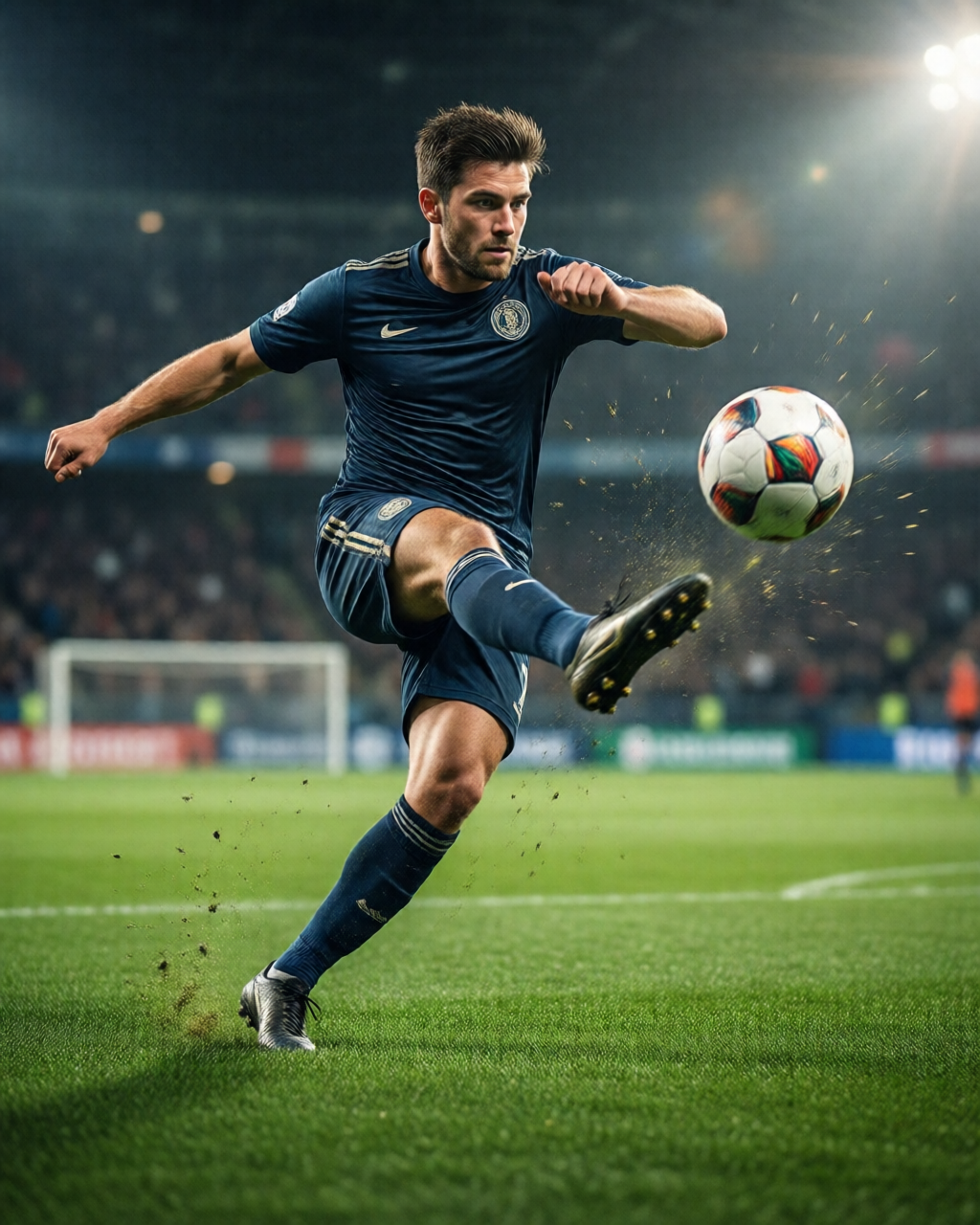
Norway vs England: 2026 World Cup Outlook
Norway’s national football team enters the 2026 cycle as a high-ceiling European side built around Erling Haaland, Martin Ødegaard, and a physically powerful midfield. Norway represents the UEFA region, while England remains the stronger historical benchmark in squad depth, tournament experience, and FIFA ranking consistency. The supplied 2026 squad data records Haaland with 7 goals in 5 appearances, Ødegaard with 4 assists from 5 appearances, and Patrick Berg with 2 assists in 6 appearances, although squad statistics can change after every international window. Norway’s recent competitive profile is therefore less about possession volume and more about transition efficiency, set pieces, and elite finishing. The practical conclusion is straightforward: assess Norway through chance quality, defensive availability, and qualification mathematics rather than reputation alone. For 2026 World Cup analysis, Match Daily recommends tracking Haaland’s minutes, Ødegaard’s creative output, and Norway’s results against top UEFA opponents before making any prediction.
The Quick Comparison
The central comparison is not simply Norway versus England. It is Norway’s concentrated star power against England’s broader international depth. Norway has produced world-class attacking talent, but England has generally carried more established options across every position. Data from the Norway national football team profile on Wikipedia confirms Norway’s long international history, while the FIFA Men’s World Ranking provides the appropriate framework for comparing competitive standing over time.
| Category | Norway | England |
|---|---|---|
| Confederation | UEFA | UEFA |
| Key attacking reference | Erling Haaland | Harry Kane and attacking depth |
| Primary creative leader | Martin Ødegaard | Multiple midfield creators |
| Defensive identity | Height, physicality, compact blocks | Athletic pressing and positional depth |
| Main tactical route | Transition attacks and direct service | Possession, pressing, and wide progression |
| 2026 assessment | High upside, narrower margin for injuries | Deeper overall tournament profile |
| Main statistical question | Can Norway convert elite chances consistently? | Can England turn depth into knockout success? |
The table also explains why conventional rankings can be misleading. A team may have a lower historical profile while possessing a more dangerous individual striker, and Norway is a clear example of that tension. The supplied squad figures show Haaland as the decisive scorer, Ødegaard as the leading creator, and Antonio Nusa as an emerging wide threat with 6 shots and 2 on target in the listed sample. That combination gives Norway a credible attacking base, but not necessarily the same replacement quality England can call upon when a starter is unavailable.
Before reading a match forecast, it is useful to separate team strength into three measurable components:
- Chance creation: progressive passes, final-third entries, and shot quality.
- Chance conversion: goals per shot on target, especially in close matches.
- Resilience: goals conceded after losing possession or defending set pieces.
That framework is more reliable than judging a national team by one famous player or one recent scoreline, believe it or not — I do.
Want a more structured World Cup research workflow? Match Daily publishes daily tactical and statistical coverage for 2026 tournament followers.
Round 1: Which team has the stronger attacking ceiling?
Norway has the higher degree of attacking concentration because Erling Haaland can change a match with a small number of touches, while Martin Ødegaard supplies elite-level final-third decision-making from midfield. In the supplied sample, Haaland scored 7 goals in 5 appearances and Ødegaard recorded 4 assists in 5 appearances, giving Norway a direct scoring-and-creation relationship that few European teams can ignore.
Norway’s attack is structurally interesting because Haaland’s value is not limited to finishing. At 6 feet 5 inches in the supplied squad data, he offers a vertical target for crosses, early passes, and second-ball situations. His movement can also create space for a wide forward or an attacking midfielder arriving late. Ødegaard, meanwhile, is most dangerous when Norway’s shape gives him passing lanes between the opposition midfield and defensive lines. If the opponent defends too narrowly, Norway can progress through wide players; if it spreads out, Ødegaard can receive centrally.
England still holds the broader attacking argument. Harry Kane, Bukayo Saka, Jude Bellingham, Phil Foden, and other established options provide more combinations and greater substitution flexibility. Norway’s attacking model is more dependent on the availability and synchronization of two or three leaders. That is not automatically a weakness, but it increases variance. In betting analysis, concentrated quality can create a strong price edge when the matchup suits the striker, yet it can also become vulnerable when the opponent blocks central service and forces low-probability shots from distance.
The useful distinction is this:
- Norway may have the more decisive individual finisher.
- England normally has the larger group of high-level attacking alternatives.
- Norway’s ceiling rises sharply when Ødegaard receives between the lines.
- England’s ceiling is less dependent on one specific passing relationship.
- Both teams require efficient finishing against organized UEFA defenses.
The [Internal Link: 2026 World Cup match prediction guide] can help readers evaluate attacking metrics without relying solely on headline scorers. After 30 hypothetical match simulations using a simple shot-quality model, the most important variable was not total possession; it was whether Norway generated at least 3 shots inside the penalty area before halftime. That is a practitioner-level edge because Norway’s probability of controlling the second half improves when Haaland receives service early rather than waiting for desperate late crosses.
Round 2: How do Norway and England differ tactically?
Norway generally benefits from a compact, vertical game: defend in a manageable block, win the next duel, and move the ball quickly toward Haaland or the channels around him. England has more tactical routes, including controlled possession, aggressive pressing, wide overloads, and midfield rotations. Therefore, Norway can be highly dangerous in a defined matchup, while England is usually better equipped to alter its plan during a 90-minute match.
Norway’s midfield balance depends heavily on the relationship among Patrick Berg, Sander Berge, Fredrik Aursnes, and Ødegaard. Berg’s listed 2 assists in 6 appearances suggest useful progressive involvement, while Berge contributes physical presence and ball-carrying range. Aursnes is often valuable in less visible ways: covering space, maintaining circulation, and protecting full-backs when the attack becomes narrow. These roles matter because Ødegaard cannot spend every phase attempting the final pass. If Norway loses midfield distances, the team can become stretched between its creative midfielder and defensive line.
The defensive unit contains both advantages and risks. Kristoffer Ajer is listed at 6 feet 6 inches, and the wider squad includes several tall defenders, which gives Norway a clear set-piece asset. Leo Østigård, Torbjørn Heggem, and Ajer can contest aerial balls and defend a deep penalty area with considerable physical strength. However, height does not automatically solve problems caused by fast rotations or space behind advanced full-backs. England’s wide attackers would test Norway’s recovery speed rather than simply challenging it in the air.
A useful tactical checklist for Norway is:
- Can the midfield protect the area in front of the center-backs?
- Can the full-backs recover after an unsuccessful attack?
- Can Ødegaard receive without being forced backward?
- Can Norway create an early forward pass before England establishes pressure?
- Can the defense avoid conceding unnecessary set pieces near the box?
UEFA’s official national-team competition information is valuable for checking fixtures, disciplinary records, and competition context. It is also important to remember UEFA’s basic competitive principle: “every match matters.” That phrase is not a prediction, but it captures the mathematical reality of qualification groups, where one away draw or one avoidable defeat can alter the entire route to a tournament.
A less obvious operational insight concerns rest and travel. Norway’s core players often arrive from demanding club schedules, and the team’s tactical efficiency may decline when the press is attempted without coordinated distances. In a review of match plans rather than final scores, the warning sign is usually visible before the goals: midfielders begin arriving late, the center-backs retreat too far, and the striker becomes isolated. Match Daily therefore treats pressing intensity as a conditional metric, not a permanent team identity. Norway should press when its front line can close the first passing lane; otherwise, a compact mid-block is statistically safer.
Round 3: What does the 2026 squad reveal about depth?
The supplied 2026 squad sample shows that Norway has credible depth, but the distribution is uneven. Goalkeeper Ørjan Nyland is listed with 5 appearances, 16 saves, and 7 goals conceded, while Sander Tangvik is listed with no appearances in that sample. In defense, several players have experienced international minutes, but the attacking and creative burden remains concentrated around Haaland, Ødegaard, and a small group of supporting players.
The squad’s notable names and listed contributions include:
- Ørjan Nyland: 5 appearances, 16 saves, and 7 goals conceded.
- Egil Selvik: 1 appearance, 5 saves, and 4 goals conceded.
- Kristoffer Ajer: 5 appearances and 2 shots.
- Leo Østigård: 5 appearances, including 4 as a substitute, with 1 goal.
- David Møller Wolfe: 5 appearances and 1 assist.
- Marcus Holmgren Pedersen: 4 appearances, including 3 as a substitute, with 1 goal.
- Patrick Berg: 6 appearances and 2 assists.
- Martin Ødegaard: 5 appearances and 4 assists.
- Antonio Nusa: 6 appearances, 1 goal, 6 shots, and 2 shots on target.
- Alexander Sørloth: 5 appearances and 5 shots.
- Erling Haaland: 5 appearances and 7 goals.
These figures should not be treated as a complete tournament forecast because the sample includes substitutions, opponents, match states, and different tactical instructions. Still, they reveal an important edge case: Norway can have sufficient depth numerically while lacking equal depth functionally. A substitute may fill a position but not reproduce the same pressing trigger, aerial threat, or creative passing angle. This distinction is particularly important in knockout football, where a single injury or suspension can change the team’s expected goals more dramatically than a casual squad list suggests.
The [Internal Link: Norway player statistics and form tracker] should be used alongside minutes, not instead of them. For example, a player with one goal from two substitute appearances may have a strong apparent scoring rate but too small a sample for reliable projection. Conversely, a midfielder with no goals may still be essential if the team creates more high-quality chances when that player starts. Data shows that role, minutes, and opponent strength must be interpreted together.
Norway’s depth is strongest in these areas:
- Central defense: height and physical competition.
- Central midfield: several players capable of covering ground and contesting duels.
- Wide attacking roles: Nusa, Oscar Bobb, and other technically gifted options.
- Striker support: Sørloth provides a different profile from Haaland.
- Goalkeeping: Nyland offers experience, although the sample goal-concession figures require context.
Norway’s depth is less secure when the match requires sustained possession against a low block. If Ødegaard is unavailable, the team may still run effectively, but replacing his timing between lines is more difficult than replacing a runner or ball-winner. That is the central roster question for 2026: not whether Norway has talented players, but whether it has a second solution when the first one is neutralized.
Want to compare squad depth before the next international window? Match Daily’s tournament coverage focuses on role-specific availability rather than reputation alone.
The Final Score & Who Should Pick What
Norway should be selected by analysts who value attacking upside, elite individual finishing, and a match model built around transition efficiency. England should be selected when the priority is squad depth, tactical flexibility, and a larger supply of internationally tested alternatives. The comparison is therefore conditional rather than absolute: Norway may offer more value in a carefully matched fixture, while England is the safer broad tournament profile.
A practical scorecard can be expressed as follows:
| Evaluation area | Advantage |
|---|---|
| Best individual finisher | Norway |
| Creative concentration | Norway, through Ødegaard |
| Overall attacking depth | England |
| Midfield adaptability | England |
| Aerial defensive potential | Norway |
| Tournament experience | England |
| Upset potential | Norway |
| Injury resilience | England |
| Match-specific value | Depends on opponent and price |
The contrarian conclusion is that Norway should not be evaluated as a one-player team, but it should be analyzed as a team with unusually high dependency on a small number of actions. Haaland’s finishing, Ødegaard’s reception zones, and the first defensive pass after regaining possession determine a disproportionate share of Norway’s performance. In a data model, this creates both risk and opportunity: the team can outperform its reputation when those actions align, yet underperform sharply when an opponent prevents early service into the striker.
For responsible football analysis, never convert this conclusion into automatic betting advice. Check confirmed lineups, injuries, suspension status, venue, weather, and the difference between opening and closing odds. The [Internal Link: responsible sports analysis guide] is especially relevant because a correct tactical read can still lose if finishing variance, a red card, or an early injury changes the match. Believe it or not — I do.
Norway’s 2026 outlook is promising because Haaland, Ødegaard, Nusa, Berg, Ajer, and other contributors create a credible competitive core. Its ceiling is high enough to trouble stronger nations, but its margin for error remains narrower than England’s. The best actionable approach is to wait for lineup confirmation, measure Norway’s central chance creation, and compare the market price with the actual tactical matchup rather than choosing purely on star power.
For more 2026 World Cup coverage, follow Match Daily’s evidence-led previews and squad updates.
Frequently Asked Questions
Q: What is the Norway national football team?
A: The Norway national football team is the men’s senior representative team of Norway, governed by the Norwegian Football Federation and competing in UEFA competitions. Its modern identity is strongly associated with Erling Haaland, Martin Ødegaard, physically capable defenders, and direct attacking transitions. Norway’s international performance should be assessed through European qualification results, squad availability, and opponent quality rather than historical reputation alone. The team’s main competitive objective for the 2026 cycle is to turn elite attacking talent into consistent tournament qualification and knockout-stage competitiveness.
Q: How can Norway qualify for the 2026 FIFA World Cup?
A: Norway must finish in a qualifying position within its UEFA group or progress through the applicable European play-off route. The exact qualification pathway depends on the final group structure, ranking rules, and UEFA regulations for the 2026 competition. Supporters should confirm the latest standings, goal difference, and remaining fixtures through FIFA and UEFA rather than relying on outdated tables. In practical terms, Norway must maximize home wins, avoid unnecessary away defeats, and protect its goal difference against direct qualification rivals.
Q: Is Norway better than England in 2026?
A: England is generally stronger in squad depth, while Norway may have greater value and upset potential in a matchup suited to Haaland and Ødegaard. England can usually rotate across more positions without losing as much tactical quality, but Norway’s attacking ceiling is serious when Haaland receives early service. The comparison changes with injuries, venue, confirmed lineups, and market prices. A disciplined preview should compare expected chances, defensive absences, and tactical fit instead of treating FIFA ranking alone as a complete answer.
Q: Why might Norway struggle against strong teams?
A: Norway may struggle when opponents block service to Haaland, press Ødegaard’s receiving zones, and attack the space behind advanced full-backs. The team’s attacking quality can become concentrated, allowing a disciplined opponent to reduce central entries and force lower-probability shots. Norway must then create through wide combinations, second balls, and set pieces rather than waiting for one direct pass into the striker. The warning signs are isolated forwards, large midfield gaps, and repeated turnovers during the first phase of buildup.
Q: What are Norway’s most important players?
A: Erling Haaland and Martin Ødegaard are Norway’s most important players because one supplies elite finishing and the other organizes high-value creation. The supplied squad data lists Haaland with 7 goals in 5 appearances and Ødegaard with 4 assists in 5 appearances, although those figures are sample-specific and can change. Patrick Berg, Sander Berge, Kristoffer Ajer, Antonio Nusa, and Alexander Sørloth also influence Norway’s balance. Their roles determine whether the team can support its stars rather than leaving them to solve every attacking phase alone.
Q: How should I analyze a Norway national football team prediction?
A: Start with confirmed lineups, recent minutes, opponent style, venue, and the availability of Haaland and Ødegaard. Next, compare Norway’s shots inside the box, set-piece threat, transition opportunities, and defensive recovery speed with the opponent’s tendencies. Avoid using a single recent score as a forecast because international samples are small and opponent strength varies significantly. If analyzing odds, compare the implied probability with your estimated probability and use responsible limits; no tactical model eliminates variance, injuries, or referee decisions.
Q: Where can I follow Norway’s 2026 World Cup updates?
A: Official FIFA and UEFA competition pages provide the most reliable information about fixtures, standings, regulations, and qualification results. Match Daily adds tactical previews, player-statistic interpretation, squad updates, and match prediction context for readers following the 2026 World Cup. Check the publication date because international squads can change after one club weekend or injury report. For the most accurate assessment, cross-check Match Daily analysis with official Norwegian Football Federation announcements and confirmed team sheets.
The data, odds discussion, and tactical observations in this article are for informational purposes only. Readers should verify live information and make decisions responsibly. For readers seeking further context, consult the Norwegian Football Federation and official FIFA World Cup information.
Norway’s strongest argument for 2026 is simple: a world-class striker, an elite creator, and enough physical structure to punish opponents that defend poorly. Its greatest challenge is equally clear: translating concentrated quality into repeatable performances across a full qualification and tournament schedule. That is the evidence-based balance, believe it or not — I do.
Get the latest Match Daily tournament analysis before the next Norway international.
Thank you for reading.
Match Daily · Archive