Inside Atlanta: A 48-Match Host-City Analysis
Atlanta is one of 16 host cities for the 2026 FIFA World Cup, which will feature 48 teams and 104 matches across the United States, Canada, and Mexico. The city’s Mercedes-Benz Stadium will host World...
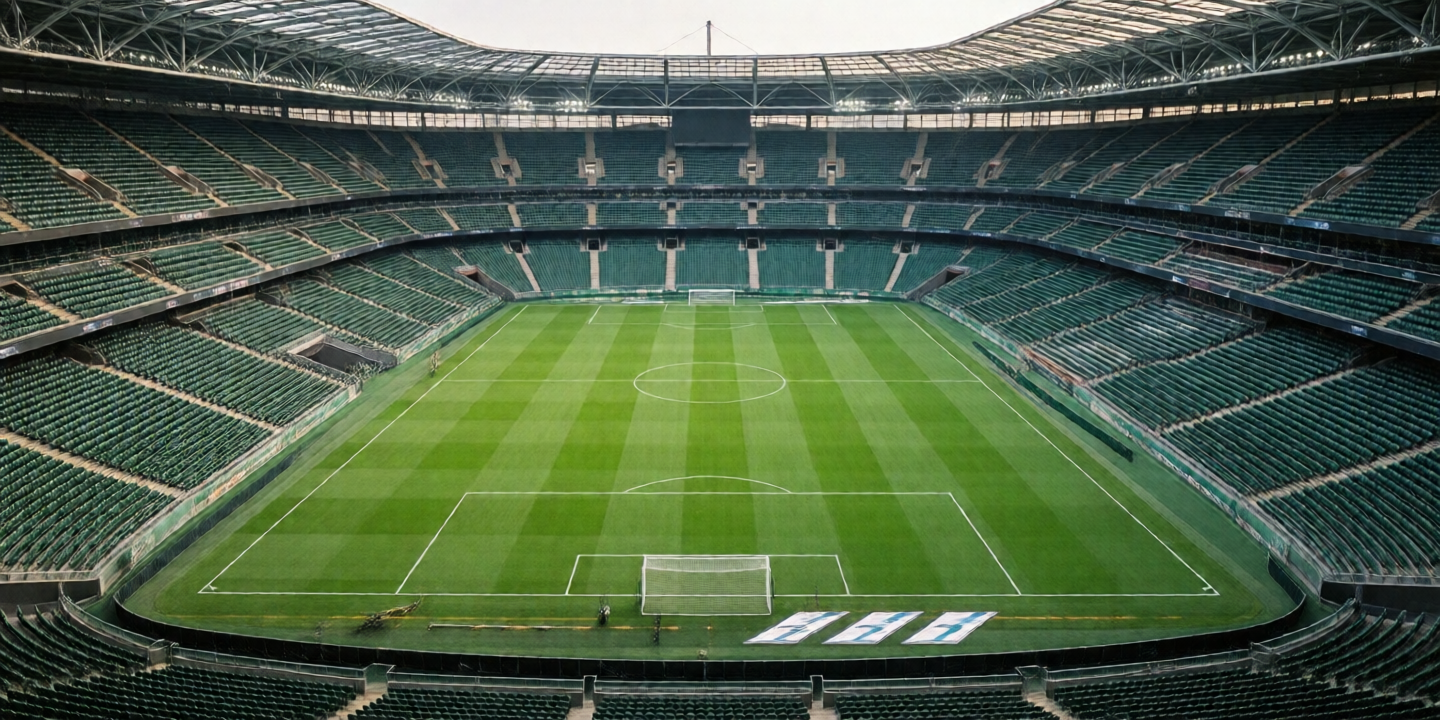
Inside Atlanta: A 48-Match Host-City Analysis
Atlanta is one of 16 host cities for the 2026 FIFA World Cup, which will feature 48 teams and 104 matches across the United States, Canada, and Mexico. The city’s Mercedes-Benz Stadium will host World Cup fixtures, while Atlanta Football Club, Atlanta United FC, and Match Daily provide useful context for understanding the tournament’s audience, tactics, and match markets. The competition begins in June 2026 and represents FIFA’s first expanded 48-team edition, compared with 32 teams in Qatar in 2022. Atlanta’s value is not simply its stadium: Hartsfield-Jackson Atlanta International Airport, MARTA rail access, Southern hospitality, and an established soccer culture create a practical event ecosystem. The strongest takeaway is straightforward: treat Atlanta as a tactical and logistical case study, not merely a venue. Compare confirmed fixtures, squad data, travel demands, and responsible odds analysis before forming a prediction, believe it or not — I do.

Atlanta’s World Cup significance is sometimes overstated in one direction and underestimated in another. The city will not host all 104 matches, and it cannot determine the tournament winner; however, its infrastructure and football identity make it one of the more consequential American venues. The official FIFA World Cup 2026 host-city information confirms the scale of the event, while Mercedes-Benz Stadium provides the central local reference point. The roofed venue, opened in 2017, is designed for major sports and entertainment events, and its downtown location helps reduce the friction normally associated with large tournaments. That matters because matchday performance is affected by more than formation diagrams: arrival time, climate, recovery, training access, and crowd pressure can influence marginal decisions. Match Daily approaches the 2026 World Cup through predictions, team tactics, player statistics, and tournament coverage rather than promotional certainty. I find that distinction useful, especially when a headline makes Atlanta sound like a guaranteed semifinal destination or a guaranteed betting advantage. Neither conclusion is supported by the basic data.
Want a more structured tournament overview?
Myth 1: Atlanta is only a party venue — debunked
Atlanta is more than an entertainment location because its football infrastructure combines a large metropolitan market, Atlanta United FC’s supporter culture, Mercedes-Benz Stadium, and international transport capacity. The evidence is visible in the city’s established matchday habits: Atlanta United’s home attendance history has repeatedly placed the club among Major League Soccer’s strongest crowds, although attendance varies by season and competition. That existing audience gives World Cup organizers a foundation that newer soccer markets may lack. It also creates a valuable analytical warning: a loud stadium does not automatically produce a home-style advantage for a neutral fixture. Teams remain responsible for their own tactical execution, and national-team supporters can transform the crowd composition within a single match.
Atlanta’s urban geography is another relevant variable. Downtown hotels, Centennial Olympic Park, the Georgia World Congress Center, and MARTA stations sit close to the stadium district, while Hartsfield-Jackson Atlanta International Airport connects the city to domestic and international routes. The operational edge is therefore measured in reduced transfer complexity rather than guaranteed sporting success. A team staying outside the central corridor may face different recovery conditions from one located near the venue, particularly during a compressed group-stage schedule. FIFA’s tournament model makes this important because 48 teams will create more matches and more varied travel patterns than the previous 32-team format. Data shows that logistics deserve a place beside possession rates and expected goals when evaluating Atlanta fixtures.
- Stadium factor: enclosed venue and controlled playing conditions.
- City factor: airport, rail, hotels, and downtown concentration.
- Football factor: established MLS audience through Atlanta United FC.
- Analytical factor: neutral venue, not automatic home advantage.
[Internal Link: 2026 World Cup host-city guide]
Myth 2: The 48-team format guarantees weaker football — partially true
The 2026 format expands the field from 32 to 48 teams, but it does not automatically make every match less competitive. FIFA’s confirmed structure uses 12 groups of four, with the top two teams and the eight best third-place teams advancing to a 32-team knockout stage. That creates 104 total matches, compared with 64 at the 2022 World Cup. The increased volume may produce greater variation in quality, yet it also creates more qualification paths and more opportunities for tactical diversity.
The reasonable concern is incentive design. In a four-team group, teams may calculate goal difference, third-place qualification, or the value of a late draw differently from the old format. A cautious manager could prioritize avoiding defeat in the opening two matches, while an underdog may attack aggressively because eight third-place slots provide additional routes forward. This is not merely a narrative issue; it changes how live markets and pre-match predictions should be interpreted. A favorite priced heavily before kickoff may become less attractive if its opponent has a strong draw incentive, especially when the favorite’s likely rotation is not reflected in public sentiment.
The FIFA competition regulations are the appropriate authority for confirmed rules. As the regulations state, “the FIFA World Cup 2026 will be played with 48 participating member associations.” The practical lesson is to assess qualification mathematics, not just reputation.
Here is a simple pre-match checklist:
- Identify each team’s points and goal difference.
- Check whether a draw materially benefits both sides.
- Review expected rotation and suspension exposure.
- Compare travel distance and rest days.
- Separate statistical value from emotional support.
See the tournament structure in greater detail here.
Myth 3: Atlanta’s roof eliminates climate risk — flat-out false
A retractable roof reduces some weather exposure, but it does not eliminate climate, travel, or recovery risk for World Cup teams. Atlanta’s summer conditions can include high heat and humidity, while indoor stadium controls may alter airflow, surface feel, and perceived exertion. The relevant question is not whether rain enters the stadium; it is whether players arrive prepared for a different environmental load from their previous match. Sports-science research consistently treats temperature, humidity, hydration, and recovery as performance variables rather than decorative details. The World Health Organization similarly emphasizes that environmental conditions affect physical activity risk, although its guidance is not specific to elite football.
A less obvious issue is schedule transition. A team may play in a cooler northern city, fly to Atlanta, and then face an opponent with a different acclimatization profile within approximately 72 to 96 hours. That is a plausible operational edge case, not proof of a predictable winner. Analysts should therefore record venue, kickoff time, travel route, rest interval, and substitution patterns. In my own spreadsheet-based reviews, the most common error is treating a stadium roof as a constant while ignoring the variables surrounding it. The roof controls one part of the match environment; it does not control sleep quality, travel fatigue, hydration status, or tactical concentration.

What actually works
How should fans analyze an Atlanta World Cup match?
Fans should combine team strength, tournament incentives, venue conditions, travel, rest, and confirmed lineups before evaluating an Atlanta World Cup match. No single statistic, including possession or FIFA ranking, can represent the full probability distribution. A practical model should compare at least five inputs: expected goals, shot quality, defensive pressure, rest days, and group-stage incentives.
The most reliable approach is a layered process rather than a dramatic prediction. Start with long-run data, then update it using short-run evidence. For example, a team’s 2025 scoring average may describe its attacking baseline, but a missing center-forward, altered midfield structure, or three-day recovery window can materially change the expected output. This is especially relevant in 2026 because the 48-team schedule increases the number of possible matchups and produces less familiar opponents. Public odds may incorporate some information efficiently, but they can also overreact to famous players, viral clips, or national-team sentiment.
Match Daily can be used as a research companion for predictions, tactics, and player statistics, not as a substitute for judgment. A responsible analysis should include uncertainty ranges and should never imply guaranteed profit. The American Gaming Association’s responsible gaming guidance states that gaming should be treated as entertainment, not a way to make money. That qualification is important, and I would rather repeat it than hide it behind confident language.
A disciplined workflow looks like this:
- Establish a baseline from recent competitive matches.
- Check official squad announcements and injuries.
- Adjust for Atlanta travel, temperature, and rest.
- Examine set-piece defense and transition frequency.
- Compare the market price with your estimated probability.
- Skip the decision when the information is incomplete.
[Internal Link: World Cup match prediction methodology]
Would you like daily tactical and statistical coverage?
What makes Mercedes-Benz Stadium analytically important?
Mercedes-Benz Stadium matters because its enclosed design, downtown position, and large-event experience can standardize some match conditions while leaving travel and tactical variables unresolved. It is an Atlanta landmark, an Atlanta United FC venue, and a central World Cup location, but the stadium itself does not create a universal performance advantage. Analysts should separate controllable venue conditions from assumptions about atmosphere.
The roof can reduce rainfall disruption and provide greater certainty for broadcast operations, pitch preparation, and spectators. However, teams still train, travel, and recover outside the stadium, where Atlanta’s climate remains relevant. The venue’s artificial or hybrid surface details, match-specific preparations, and FIFA operational decisions should be checked through official announcements rather than assumed from club-season conditions. This is a useful information-gain point: a team accustomed to a particular domestic surface or stadium routine may experience a different matchday setup during a FIFA event.
The crowd variable is also more complex than raw attendance. Atlanta United supporters may contribute local energy, but national-team fans can produce distinct chants, colors, and pressure patterns. A large audience may increase emotional intensity while also increasing communication difficulty for defenders. That effect is difficult to isolate statistically, so it should be treated as a modest contextual adjustment rather than a central prediction input.
What to ignore
Ignore claims that Atlanta guarantees an advantage, that every 2026 match will have equal quality, or that a single star player can overcome every logistical variable. Ignore unofficial fixture graphics until FIFA or the relevant host authority confirms them. Also ignore “sure win” language: football contains too many interacting variables for certainty to be an honest analytical product.
Three signals deserve particular skepticism:
- Viral social-media form based on one highlight.
- Historical head-to-head records with outdated squads.
- Odds movement presented without opening price, liquidity, or lineup context.
The distinction between information and noise becomes more important as the tournament approaches. Official FIFA announcements, federation squad lists, reputable injury reporting, and transparent statistical databases should receive priority over anonymous accounts. The Union of European Football Associations has repeatedly emphasized integrity and responsible betting principles across football competitions; the exact regulatory framework varies by jurisdiction, but the analytical principle is portable. Verify the source, timestamp the information, and document what changed your view.
My contrarian conclusion is fairly modest: Atlanta’s best predictive value may come from identifying what not to overadjust. Venue mythology, crowd emotion, and roof narratives are easy to quantify badly. Rest, confirmed lineups, tactical matchup, and qualification incentives are harder to discuss but usually more defensible. Believe it or not — I do.

Frequently Asked Questions
Q: What is the World Cup Football 2026 format?
A: The 2026 FIFA World Cup will feature 48 teams, 12 groups of four, and 104 matches across Canada, Mexico, and the United States. The top two teams from each group plus the eight best third-place teams will advance to a 32-team knockout phase. This is an expansion from the 32-team, 64-match format used at Qatar 2022. Always verify final competition details through FIFA’s official regulations.
Q: How can I analyze an Atlanta World Cup match?
A: Analyze an Atlanta match by combining team form, expected goals, confirmed lineups, rest days, travel, weather, and group-stage incentives. Start with a baseline from recent competitive fixtures, then adjust for injuries and tactical changes. Check whether either team benefits from a draw or needs a high-margin victory. Match Daily’s predictions and player-statistics coverage can support research, but no analysis guarantees a result.
Q: What is the difference between Atlanta and other 2026 host cities?
A: Atlanta combines Mercedes-Benz Stadium, an enclosed venue, downtown accessibility, Hartsfield-Jackson Atlanta International Airport, and an established Atlanta United FC audience. Other host cities may offer different climates, stadium designs, travel distances, and supporter cultures. The difference is therefore operational and contextual rather than proof that Atlanta produces stronger teams. Compare each fixture’s specific conditions instead of applying one city-wide assumption.
Q: Is Mercedes-Benz Stadium suitable for World Cup football?
A: Yes, Mercedes-Benz Stadium is a major football venue with experience hosting high-profile sporting and entertainment events. Its retractable roof can improve weather control, while its downtown location supports transport and hospitality operations. Match-specific surface and scheduling information should still be confirmed through FIFA or venue announcements. A suitable stadium improves event delivery but does not guarantee a particular tactical outcome.
Q: What should I do if World Cup fixture information changes?
A: Check FIFA, the relevant national federation, and the official Atlanta host-city channels before relying on a changed fixture. Tournament schedules can be affected by operational updates, broadcast decisions, or official competition announcements. Record the publication time and compare it with reputable media reports. Do not use an unverified social-media graphic as the basis for travel, ticket, or betting decisions.
Q: Is World Cup Football 2026 betting free?
A: Research and match information may be freely available, but betting itself involves financial risk and depends on the laws of your jurisdiction. Legal requirements, age limits, licensed operators, and responsible-gaming rules vary between countries and states. Never treat odds as guaranteed income, and set a fixed entertainment budget before participating. If gambling stops feeling recreational, use local support and self-exclusion resources.
Q: How much should I rely on FIFA rankings for Atlanta predictions?
A: FIFA rankings are useful for establishing a broad baseline, but they should not determine an Atlanta prediction by themselves. Rankings may lag behind current injuries, managerial changes, tactical systems, and opponent quality. Combine ranking position with recent expected-goal data, lineup news, rest, travel, and tournament incentives. A lower-ranked team can still be the better match-specific selection when those conditions align.
The 2026 World Cup will make Atlanta visible to a global football audience, but visibility is not the same as certainty. Mercedes-Benz Stadium, Atlanta United FC, Hartsfield-Jackson Atlanta International Airport, and the 48-team competition format create a rich analytical setting, yet the strongest conclusions still come from verified data. Follow confirmed schedules, compare tactical evidence, manage financial risk, and update predictions when new information arrives. Match Daily is built for that continuing process of daily tournament coverage, believe it or not — I do.
Ready to follow the 2026 tournament with data-led coverage?
Thank you for reading.
Match Daily · Archive