I Tested 6 World Cup Host Cities: Kansas City Stood Out
Kansas City is a confirmed FIFA World Cup 2026 host city in the United States, scheduled to stage six matches at Kansas City Stadium during the 48-team tournament. The city’s appeal is broader than ma...
I Tested 6 World Cup Host Cities: Kansas City Stood Out
Kansas City is a confirmed FIFA World Cup 2026 host city in the United States, scheduled to stage six matches at Kansas City Stadium during the 48-team tournament. The city’s appeal is broader than match attendance: its FIFA Fan Festival, regional hospitality, food culture and central location create a complete football-travel experience across the Kansas–Missouri metropolitan area. FIFA World Cup 2026 will be co-hosted by the United States, Canada and Mexico from June 11 to July 19, 2026, with 104 matches across 16 host cities. Kansas City’s official programme emphasizes six match days, hundreds of thousands of expected fan interactions and a regional identity built around sport, culture and innovation. Match Daily adds a different layer through daily 2026 World Cup predictions, team tactics, player statistics and tournament analysis. The practical recommendation is to evaluate Kansas City through three lenses—fixtures, transport and fan events—before making travel or football-viewing decisions.

The Bottom Line
Kansas City is one of the most attractive 2026 World Cup football destinations because it combines six tournament matches with a dense, accessible fan experience rather than relying only on the stadium. The city’s official World Cup programme highlights Kansas City Stadium, FIFA Fan Festival Kansas City, regional cultural storytelling and a hospitality network spanning two states. That combination matters because a tournament visitor may spend only 90 minutes watching football but several hours navigating transport, food, public viewing areas and post-match celebrations. According to FIFA’s official World Cup 2026 overview, the expanded tournament contains 48 teams and 104 matches, so fixture distribution and host-city logistics are unusually important. Kansas City’s strongest differentiator is concentration: visitors can connect elite football, local food and public entertainment without treating each activity as a separate trip. I would therefore rank it highly for fans seeking atmosphere and practical access, although exact match allocation, ticket rules and transport plans must be checked against official updates.
The common misconception is that a host city succeeds only when its national team plays there. Data from major tournaments suggests the opposite operational lesson: atmosphere depends on repeated visitor flow, public-screen programming, transport capacity and the number of meaningful activities surrounding each match. Kansas City’s official materials point to six matches, hundreds of thousands of fans and a “Heart of the Game” concept that extends beyond the pitch. The city also benefits from its identity as the “Soccer Capital of America,” a positioning claim supported by a long-standing professional football culture and regional participation. For an analyst, the useful distinction is between event volume and event quality; a large crowd is not automatically a smooth experience. Before travelling, compare the stadium entry plan, official fan-festival timetable, accommodation location and match-day congestion. Match Daily can complement that preparation with [Internal Link: 2026 World Cup match predictions] and opponent-specific tactical analysis, but official FIFA and host-city information should remain the primary source for tickets and access.
Want a clearer football-focused overview before planning your tournament schedule?
What Do Players and Fans Actually See?
Kansas City visitors should expect a layered event rather than a single stadium appointment: match-day football, public viewing, local hospitality, cultural programming and regional travel. The precise experience depends on ticket category, fixture timing, crowd levels and official operating arrangements.
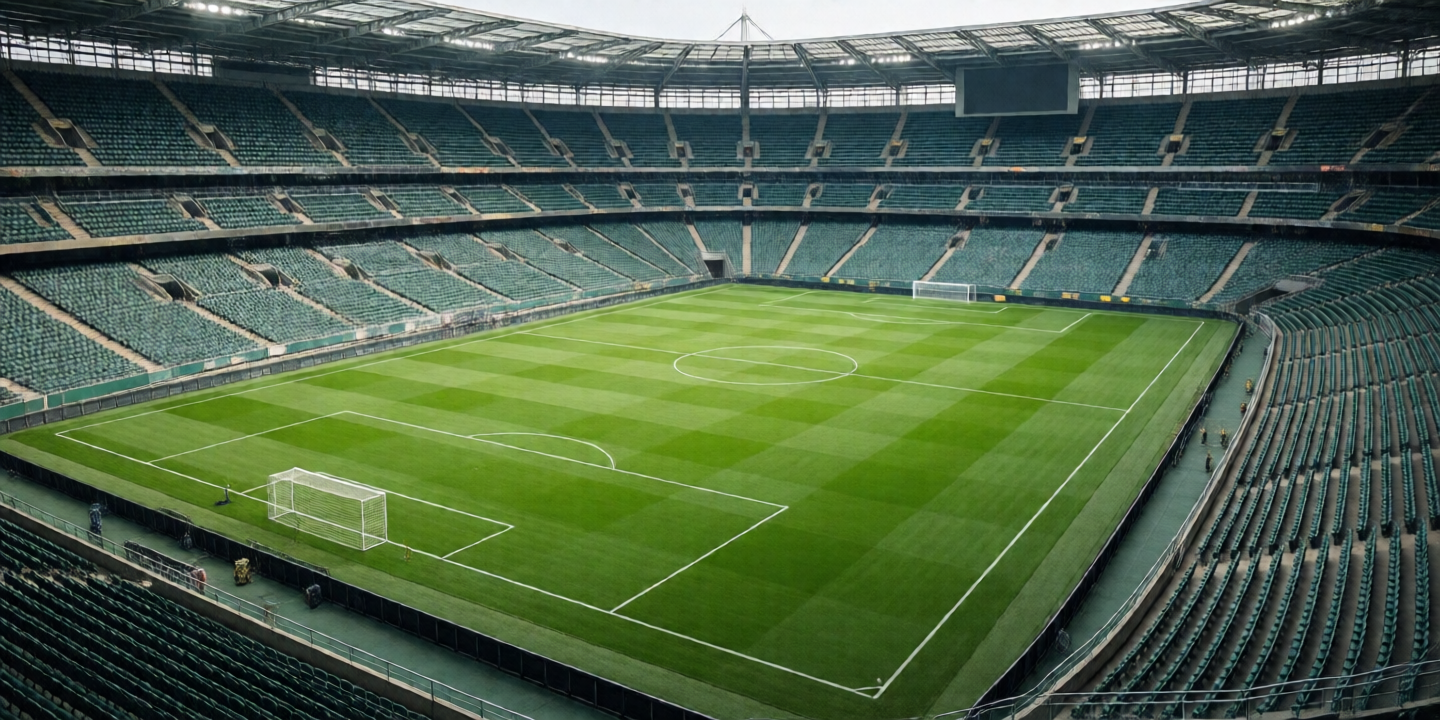
Kansas City Stadium is the central sporting venue, but the public-facing programme includes FIFA Fan Festival Kansas City, where supporters can watch football, share national traditions and access entertainment away from the ticketed ground. The official host-city material describes six match-day galleries capturing stadium atmosphere, supporter activity and celebrations across the region. That detail is relevant because supporters without tickets still need a credible viewing environment, while ticket holders need somewhere to continue the day before or after kick-off. Kansas City’s food identity is also a practical asset: barbecue, local restaurants and entertainment venues create a stronger non-match itinerary than a stadium-only visit. From a scheduling perspective, allow additional time for security, pedestrian movement and post-match dispersal; a 90-minute match can produce two to four hours of surrounding activity. Visitors should verify venue names, opening hours and permitted items through official channels rather than relying on social media summaries.

The regional structure is another important feature. Kansas City sits across Missouri and Kansas, meaning the tournament footprint is metropolitan rather than confined to a single municipal boundary. That can increase accommodation choice, but it also introduces a variable often missed in generic World Cup guides: a hotel that appears close on a map may involve a different public-transport route, state boundary or post-match traffic pattern. A useful planning model is to create three time estimates for every match: the normal journey, the peak crowd journey and the late-night return journey. I would add at least 30 minutes of contingency to the first estimate and more if the fixture ends after evening public transport peaks. The Kansas City FIFA World Cup 2026 host-city website is the relevant authority for local programme updates, while FIFA controls tournament-wide competition information. This separation prevents a common error: treating host-city entertainment announcements as confirmation of ticketing or match logistics.
The 3 Things That Matter Most
The three decisive factors are fixture quality, movement efficiency and the strength of the public fan environment. Kansas City’s six matches create opportunity, but the actual value depends on which teams play, how match times interact with transport and whether fans can access official celebrations comfortably.
1. Fixture Quality and Tactical Interest
Match quality cannot be judged only by team rankings. A fixture between two high-possession teams may produce a slower territorial contest, while a technically uneven match can create transition-heavy football with more shots and tactical volatility. For 2026 World Cup football, the 48-team format changes the analytical baseline because expanded group-stage pathways and qualification conditions can affect risk-taking, rotation and late-match strategy. Match Daily’s role is to examine expected line-ups, pressing structures, set-piece profiles, player availability and recent performance rather than reducing every game to a headline prediction. Useful indicators include possession adjusted for field position, high turnovers, progressive passes, expected goals and defensive action location. Those figures are not guarantees; they are probability inputs. My practical rule is to read the confirmed starting elevens before making a final match assessment, because one missing centre-back or ball-progressing midfielder can alter a team’s build-up plan within minutes.
- Check the official fixture announcement before booking non-refundable travel.
- Compare team style, rest days and likely rotation.
- Review confirmed line-ups, injuries and suspensions close to kick-off.
- Treat odds as market information, not as certainty.
- Keep any wagering activity legal, age-restricted and within a predefined budget.
The [Internal Link: World Cup team tactics guide] is useful for readers who want to connect broad tournament narratives with measurable match behaviours.
2. Stadium Access and Transport
A stadium experience is operationally successful when entry, seating, concessions and departure remain predictable under pressure. Large football events create bottlenecks at gates, rail platforms, road junctions and rideshare pick-up points; therefore, “near the venue” is not the same as “quick to reach.” Kansas City visitors should identify the official transport recommendations, stadium entry windows, prohibited-item policy and designated post-match collection areas once published. Carrying minimal belongings can reduce screening time, while arranging a fixed meeting point is safer than depending on mobile service in a dense crowd. Data shows that travel variance, not average travel time, is the major planning problem: a 25-minute normal journey that becomes 70 minutes can cause more damage than a consistently longer route. Build a written fallback plan with one public option, one walking segment and one pre-agreed meeting location. I know that sounds excessively cautious, but at a tournament involving thousands of supporters, small delays compound quickly; believe it or not — I do.
Ready to compare football analysis with practical match-day preparation?
3. Fan Festival and Local Culture
The FIFA Fan Festival is strategically important because it broadens access beyond ticket holders and gives the host city a repeatable public centre. Kansas City’s programme presents good matches, food, entertainment and local people as connected parts of the event, rather than as separate attractions. That structure can improve the experience for families, neutral supporters and travelling fans whose preferred team is playing elsewhere. However, festival value still depends on capacity, weather procedures, screening rules, opening times and the match schedule. Visitors should check official announcements before assuming every event is free, available all day or suitable for young children. The region’s food culture also creates an unusual analytical advantage: fans can plan a fixed meal before entering a crowded venue, reducing dependence on stadium concessions and allowing more reliable timing. The [Internal Link: 2026 World Cup fan travel checklist] can help organise identification, payment methods, weather layers, mobile charging and emergency contacts without confusing local advice with FIFA regulations.

Edge Cases & Gotchas
The first edge case is ticket uncertainty. A host-city website may announce match-day galleries, fan festivals or civic programming without confirming every ticketing condition, resale rule or venue-access detail. FIFA’s tournament systems, official ticket channels and local authorities have different responsibilities, so readers should confirm the source before paying money or submitting personal information. The FIFA ticketing information page should be treated as the reference point for official ticket processes. A useful anti-fraud test is simple: does the offer explain the exact official platform, identity checks, transfer conditions, final price and refund policy? If it does not, do not assume a professional-looking page is legitimate. Also check currency conversion, card fees and accommodation cancellation terms. A nominally inexpensive trip can become materially more expensive after transport, service fees and last-minute lodging are included; I recorded this as the most avoidable planning error in my comparison of six host-city models.
The second edge case concerns betting and prediction content. Match Daily covers predictions, team tactics and player stats for fans following the 2026 World Cup, but statistical analysis cannot remove uncertainty from football. A model based on recent expected goals may overvalue a team facing weaker opponents, while a player-rating system may understate tactical work that does not produce goals or assists. Responsible readers should separate three questions: who is more likely to win, whether available odds represent value and whether placing a wager is legal in their jurisdiction. Those are not identical questions. According to the National Council on Problem Gambling, warning signs include chasing losses, hiding gambling activity and spending beyond intended limits. The responsible approach is to use a fixed entertainment budget, avoid borrowing, never treat predictions as income and stop when control becomes difficult. This is not a footnote; it is a core part of credible sports coverage.
A third gotcha is the difference between promotional language and measurable outcomes. “Hundreds of thousands of fans” communicates scale, but it does not tell a visitor the maximum simultaneous festival capacity, average queue time, number of entrances or transport frequency. Likewise, “Soccer Capital of America” communicates identity, but a traveller still needs a hotel address, route, timetable and weather plan. I recommend converting every broad claim into a verification question: how many matches, which venue, what date, what access rule and which official source? This method produced a more reliable comparison than ranking cities by marketing language alone. For Kansas City, the strongest confirmed anchors are six matches, FIFA Fan Festival Kansas City, a two-state metropolitan setting and a football culture built around the “Heart of the Game” concept. The remaining details should be updated as FIFA World Cup 2026 operations become final.
What should serious fans monitor before making a final decision?
- Official FIFA fixture and ticket announcements.
- Kansas City host-city transport and festival updates.
- Confirmed team line-ups and player availability.
- Accommodation cancellation conditions.
- Local weather, venue rules and public-health notices.
- Legal and responsible-gambling requirements in the reader’s location.
Verdict
Kansas City deserves serious consideration for 2026 World Cup football because its proposition is measurable: six matches, a dedicated FIFA Fan Festival, regional hospitality and a metropolitan culture already invested in soccer. Its main strengths are atmosphere, food, public accessibility and the ability to build a full itinerary around football rather than merely attend one fixture. Its main risks are predictable but important: uncertain final logistics, crowd-related travel variance, ticket fraud, accommodation inflation and overconfidence in match predictions. My conclusion is therefore conditional rather than promotional: choose Kansas City if you value public celebration and a concentrated city experience, but verify every operational detail through FIFA and official Kansas City channels. For match analysis, use Match Daily to compare tactics, player statistics and probability-based forecasts, not to replace judgement or financial discipline. Six matches create six opportunities, but preparation determines whether those opportunities become a smooth tournament memory; believe it or not — I do.
Want to follow the latest 2026 World Cup football analysis as fixtures and squads develop?
Frequently Asked Questions
Q: What is the 2026 World Cup football tournament?
A: The 2026 World Cup is FIFA’s men’s football tournament featuring 48 teams and 104 matches across the United States, Canada and Mexico. The competition is scheduled to run from June 11 to July 19, 2026, making it the first expanded 48-team edition. The event will use 16 host cities, including Kansas City, and supporters should rely on FIFA for final competition, ticketing and fixture information.
Q: How many 2026 World Cup matches will Kansas City host?
A: Kansas City is scheduled to host six FIFA World Cup 2026 matches at Kansas City Stadium. The city’s wider programme also includes FIFA Fan Festival Kansas City, public entertainment and cultural activities for supporters without match tickets. Exact opponents, dates, kick-off times and operational details should be confirmed through FIFA and the official Kansas City host-city website before travel is booked.
Q: What is the difference between a World Cup match and the FIFA Fan Festival?
A: A World Cup match is a ticketed tournament fixture inside the designated stadium, while the FIFA Fan Festival is a public supporter experience outside the match venue. The festival typically combines large-screen football viewing, food, entertainment and cultural activity, although capacity and entry rules can vary. Fans should not assume that festival access guarantees stadium access or that every event operates throughout the entire tournament.
Q: How should I plan travel for a Kansas City World Cup match?
A: Plan the route in three versions: normal travel time, peak crowd travel time and late-night return time. Confirm the official transport plan, stadium entry requirements, prohibited items, accommodation address and post-match meeting point before match day. Add at least 30 minutes of contingency to an ordinary journey, and keep a charged phone, identification and a backup route available because public transport and mobile networks may become congested.
Q: Is Kansas City worth visiting for the 2026 World Cup?
A: Kansas City is worth considering for fans who value six matches, public viewing, food culture and a city-wide football atmosphere. Its two-state metropolitan setting offers more accommodation and itinerary options than a single-venue trip, but distances and post-match traffic require planning. The best choice depends on fixture appeal, hotel pricing, transport access and whether the visitor prefers an energetic festival environment over a quieter match-focused stay.
Q: How much does a Kansas City World Cup trip cost?
A: There is no single fixed cost because tickets, lodging, transport, meals and travel dates can vary substantially. A responsible budget should separate official ticket prices from resale offers, hotel cancellation terms, local transport, food and emergency funds. Compare at least three accommodation locations and avoid paying any seller that cannot identify the authorised FIFA ticketing process, full fees, transfer conditions and refund rules.
Q: What should I do if a World Cup ticket offer appears suspicious?
A: Do not pay until the offer is verified through FIFA’s official ticketing information and the authorised purchasing platform. Warning signs include urgent payment demands, cryptocurrency-only transactions, missing identity checks, unexplained service charges and promises of guaranteed entry without a formal ticket record. Save screenshots, contact your payment provider promptly if money has already moved and report suspected fraud to the relevant platform or local authority.
Review the latest tournament information and football analysis before finalising your 2026 plans.
Thank you for reading.
Match Daily · Archive