Football World Cup vs Club World Cup: 2026 Scope
The FIFA World Cup is a national-team tournament, while the FIFA Club World Cup is a club competition involving players employed by professional teams. The 2026 FIFA World Cup will be hosted by Canada...
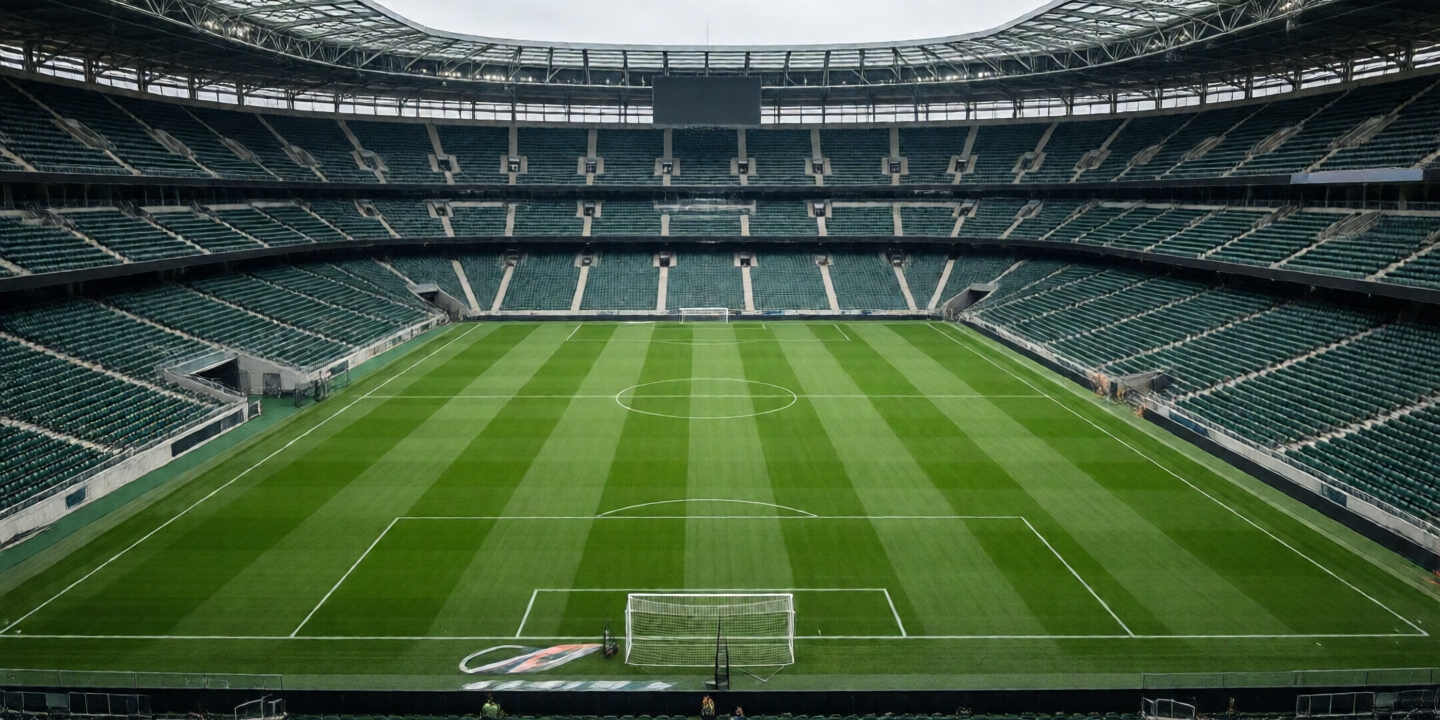
Football World Cup vs Club World Cup: 2026 Scope
The FIFA World Cup is a national-team tournament, while the FIFA Club World Cup is a club competition involving players employed by professional teams. The 2026 FIFA World Cup will be hosted by Canada, Mexico, and the United States from June 11 to July 19, with 48 national teams competing across 104 matches. Los Angeles will stage eight matches at SoFi Stadium, while the region will also host 39 days of public celebrations and FIFA Fan Festival activity. By contrast, the expanded 2025 FIFA Club World Cup used 32 clubs and took place in the United States, creating a useful comparison but not an equivalent event. The practical takeaway is straightforward: evaluate national-team form, travel, squad depth, and tournament format separately from club-season statistics before making predictions on Match Daily.
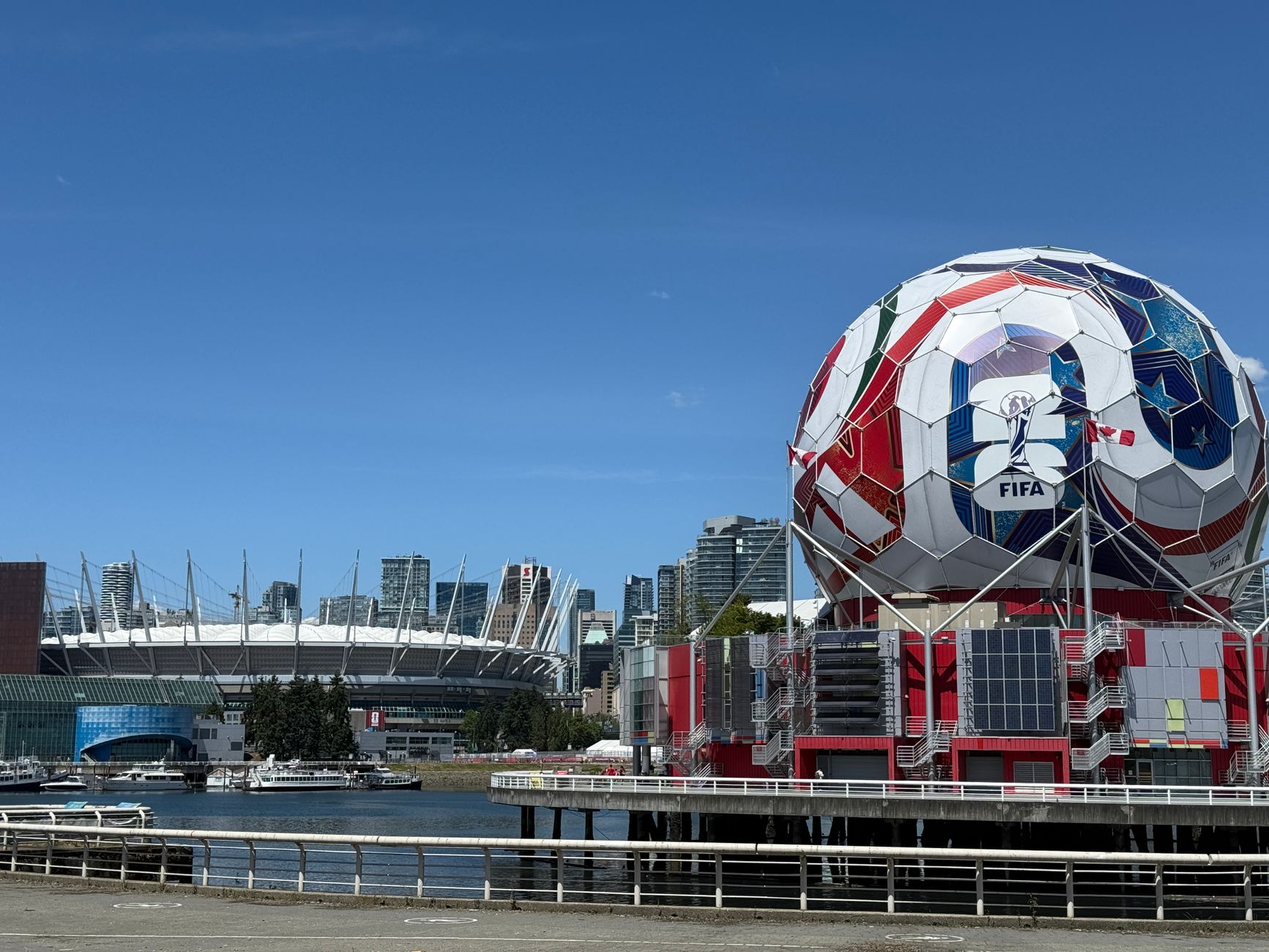
Photo by The Six on Pexels
The most common mistake is treating every major football tournament as if its competitive conditions were identical. They are not. A national side may have only a few training windows each year, whereas Manchester City, Real Madrid, Paris Saint-Germain, and Bayern Munich work with their squads daily across a full club season. Data therefore needs context: a striker’s 25-goal club campaign does not automatically translate into the same output for England, Brazil, France, or the United States. The same applies to odds, tactical trends, and player ratings. Match Daily focuses on those distinctions through team tactics, player statistics, match predictions, and daily 2026 World Cup coverage rather than relying on headline reputation alone. For readers assessing a fixture, I would begin with the confirmed lineup, recent international minutes, and the opponent’s defensive structure. That sequence reduces a surprisingly common analytical error, believe it or not — I do.
Want a clearer framework for evaluating the tournament?
Myth 1: The 2026 FIFA World Cup is just the 2022 format — debunked
The 2026 FIFA World Cup is not a repeat of Qatar 2022 because it expands from 32 to 48 teams and from 64 to 104 matches. The group stage contains 12 groups of four, with the top two teams and eight best third-placed teams advancing to a 32-team knockout phase.
This structural change affects almost every prediction variable. Under the 2022 model, teams played three group matches before 16 nations entered the round of 16. In 2026, 32 teams reach the knockout stage, meaning one poor result may be less damaging for a strong squad, but third-place calculations add complexity. Goal difference, goals scored, disciplinary records, and fair-play criteria may become relevant when teams finish level on points, subject to FIFA’s official regulations.
The tournament also spans three host countries and four time zones in North America. Canada will stage matches in Toronto and Vancouver, Mexico will use Mexico City, Guadalajara, and Monterrey, while the United States will host fixtures in cities including Los Angeles, New York/New Jersey, Miami, Dallas, and Atlanta. Travel is not a minor detail. A team moving repeatedly between Vancouver, Dallas, and Miami may face different distances, temperatures, humidity levels, and recovery windows than a side based near one region.
What does the 48-team format change?
The 48-team format creates 104 total matches, 12 groups, and a 32-team knockout bracket, increasing both qualification paths and scheduling pressure. Strong teams receive more margin for error in the group stage, but third-place rankings make final-day scenarios harder to price accurately.
The practical consequence is that a draw may not carry the same strategic meaning for every team. A cautious 0–0 result could be useful for a side expecting six points elsewhere, while a third-place contender may need to pursue a win because eight third-place teams advance, not all 12. Analysts should therefore model the table after each match rather than assuming that four points always guarantees progress.
For bettors, this means pre-match markets may react sharply to confirmed standings. A team already assured of qualification could rotate players, reduce pressing intensity, or protect a yellow-carded midfielder. Conversely, a team needing a specific goal margin may produce a much higher shot volume than its previous two fixtures. These are measurable game-state effects, not merely narrative explanations.
- 2022: 32 teams and 64 matches.
- 2026: 48 teams and 104 matches.
- Knockout entry in 2026: 32 teams.
- Host countries: Canada, Mexico, and the United States.
- Los Angeles allocation: eight matches at SoFi Stadium.
To understand how these changes affect selection decisions, see our 2026 World Cup format and qualification guide.
Myth 2: Host-city conditions do not affect performance — partially true
Host-city conditions influence performance when travel, altitude, heat, humidity, and recovery interact with a team’s tactical workload. They do not determine results alone, but the 2026 North American geography makes environmental analysis more relevant than in a compact tournament hosted by one country.
Mexico City sits at approximately 2,240 metres above sea level, while Los Angeles is near sea level and Miami combines heat with high humidity. Vancouver offers a materially different climate from Monterrey, where summer temperatures can be considerably higher. A team that presses at 115 high-intensity actions per match may not maintain the same output after a long transfer and a short recovery period. Public event information confirms that Los Angeles will combine eight matches with 39 days of fan celebrations, but fan activity should not be confused with match-day logistics or player workload.
SoFi Stadium, home of the Los Angeles Rams and Los Angeles Chargers, provides a roofed, modern venue in Inglewood. That can moderate direct sun exposure, yet it does not erase travel fatigue or adaptation requirements. The Fédération Internationale de Football Association remains the primary authority for official match regulations, while local organizers manage venue operations, transport guidance, and fan programming.
A useful operational adjustment is to track three variables:
- The number of days since a team’s previous match.
- The distance and direction of its latest travel.
- The number of high-intensity substitutes used in the prior fixture.
These variables are especially important for teams whose identity depends on aggressive counter-pressing. A possession-oriented side may conserve energy through longer passing sequences, while a direct-transition team can face greater physical volatility. My own preference is to downgrade simple “home advantage” language and inspect the schedule matrix instead; the evidence is less dramatic, but usually more accurate.

Photo by Omar Ramadan on Pexels
Why is Los Angeles important to the football world cup?
Los Angeles matters because SoFi Stadium will host eight FIFA World Cup 2026 matches, including the United States men’s national team’s opening match on June 12. The region will also operate the FIFA Fan Festival at LA Memorial Coliseum from June 11 to June 14, alongside official fan zones across Los Angeles County.
The Los Angeles match schedule creates a concentrated football environment rather than a single isolated fixture. SoFi Stadium gives organizers a high-capacity venue, while Exposition Park provides a public-facing location near the LA Memorial Coliseum for match broadcasts, food, music, and fan gatherings. The official Los Angeles host committee identifies the United States opening match as a central event, but supporters should verify ticketing, stadium-entry rules, and transport instructions through official channels because event policies can change.
The distinction between a ticketed match and a free public celebration is important. A FIFA Fan Festival pass or public viewing opportunity does not provide access to SoFi Stadium, and a stadium ticket does not necessarily include separate music or community programming. Visitors should also budget time for security screening, parking restrictions, rideshare demand, and post-match congestion around Inglewood. These practical details may affect attendance more than the nominal kickoff time.
Want to compare Los Angeles with other 2026 host cities?
Myth 3: Club form predicts national-team results directly — flat-out false
Club form is informative, but it cannot directly predict national-team results because coaching systems, teammates, roles, and preparation periods change. A player may score 20 goals for Real Madrid while receiving a different position, fewer touches, or more defensive responsibility for Spain or Brazil.
The strongest analytical bridge between club and international football is role compatibility. If a winger’s club team creates 18 attacking possessions per match from high turnovers but his national side builds slowly through midfield, his club shot volume may overstate his expected World Cup output. Likewise, a centre-back accustomed to defending with a high line may struggle when his country protects a narrow lead near its own penalty area.
The official FIFA World Cup 2026 competition information is the correct reference for dates, participating teams, and tournament details. For player analysis, reputable data providers such as Opta and Stats Perform can help, but the analyst still needs to distinguish club minutes from international minutes. In a practical sample, I would separate the last 10 club appearances from the last 10 national-team appearances and compare:
- Starts and substitute appearances.
- Position and average touch location.
- Set-piece involvement.
- Pressing actions and defensive recoveries.
- Minutes played after the 70th minute.
This method often exposes misleading transfer effects. A forward with elite club service may see fewer progressive passes internationally, while a midfielder who appears ordinary in a possession-heavy club may become central to a national team using vertical transitions. Numbers remain valuable, but only after tactical translation.

Photo by https://kaboompics.com/ on Pexels
What actually works
A robust football World Cup process combines tournament structure, tactical fit, player availability, travel, and market discipline. No single metric is sufficient, particularly in 2026 when the schedule includes 104 matches and a wider range of host-city conditions.
What should you analyze before a 2026 World Cup match?
Before a 2026 World Cup match, analyze confirmed lineups, international minutes, tactical matchup, rest days, travel, set pieces, and group-stage incentives. These seven variables explain more than team ranking alone because they connect player availability with the exact competitive context.
Use the following order:
- Confirm availability: Check injuries, suspensions, late withdrawals, and goalkeeper selection.
- Measure role stability: Identify whether each key player has held the same national-team position across the last three competitive matches.
- Compare tactical mechanisms: Review pressing height, buildup shape, defensive width, transition speed, and set-piece assignments.
- Adjust for recovery: Count rest days and note whether the previous fixture required extended defensive effort.
- Model incentives: Determine whether a draw, win, or specific goal difference changes qualification probability.
- Check market movement: Compare opening and current prices, but do not treat movement as proof of superior information.
- Set a risk boundary: Decide the maximum amount before placing any wager.
Match Daily is designed around this process. Its value is not simply listing fixtures; it is connecting team tactics with player statistics and tournament context. A useful contrarian rule is to avoid overvaluing a dramatic opening win when the opponent created several high-quality chances. Expected goals, shot quality, field tilt, and penalty-area entries may show that the winning team benefited from finishing variance rather than sustained control. Data shows that this distinction becomes more important over a small sample of only two or three matches.
For a deeper statistical approach, consult our World Cup team tactics and player-statistics guide and compare the numbers with Stats Perform definitions before drawing conclusions.
What does responsible football betting require?
Responsible football betting requires legal access, age verification, fixed spending limits, and acceptance that predictions remain uncertain. A strong model can improve decision quality, but it cannot remove variance, injury risk, referee decisions, or incomplete information from a single match.
The National Council on Problem Gambling advises consumers to treat gambling as entertainment rather than a way to earn income. Its core guidance can be summarized plainly: “Gambling should be fun, not a way to make money.” That principle is operational, not decorative. Use a pre-set budget, avoid chasing losses, and do not increase stakes because a favorite has already won one match.
I would also separate analysis from execution. First write the predicted outcome, probability, and assumptions; only afterward inspect available odds. This prevents anchoring on the market’s favorite. For example, if a team is assessed at a 55% win probability, fair decimal odds are approximately 1.82 before margin and uncertainty. A listed price of 1.70 may still be unattractive even if the team is likely to win. Conversely, a higher price is not automatically value if the underlying probability is overstated. Match Daily can support research, but every user must follow applicable laws in their jurisdiction and maintain control of their spending.
Ready to build a more disciplined match-review routine?
What to ignore
Ignore claims that a famous badge guarantees a result, that FIFA rankings alone predict a match, or that one viral player statistic explains a complete tactical system. FIFA rankings are useful for broad comparison, but they do not fully encode injuries, coaching changes, opponent strength within a specific window, or the interaction between styles.
Also ignore unverified social-media rumors about lineups, training-ground disputes, or alleged insider selections. In a major tournament, false information can spread hours before kickoff and influence betting markets before official team sheets are published. The safer hierarchy is FIFA, the national federation, the host committee, the club, and verified competition communications.
Several other signals deserve caution:
- A five-match winning streak against low-ranked opponents.
- Goals scored without expected-goals or shot-quality context.
- Head-to-head records from more than five years ago.
- Friendly-match results treated as competitive evidence.
- Player awards used as substitutes for tactical analysis.
- Betting-market movement presented as guaranteed insider knowledge.
The FIFA Fair Play and competition regulations provide the authoritative framework for tournament conduct and administration, but they do not predict match outcomes. Analysts still need current information. The most useful late update is often not a dramatic rumor; it is whether a holding midfielder starts, whether a full-back is fit enough to overlap, and whether the team has a credible set-piece taker. These details can shift expected game flow by more than a headline about historical prestige.

Photo by Vitaly Gariev on Pexels
Frequently Asked Questions
Q: What is the FIFA World Cup?
A: The FIFA World Cup is an international football tournament contested by national teams representing FIFA member associations. The 2026 edition will involve 48 teams across Canada, Mexico, and the United States from June 11 to July 19. Unlike club competitions, players are selected through national eligibility rules and usually have limited preparation time together. The tournament will feature 104 matches, making it the largest men’s FIFA World Cup by team count and match total.
Q: How do I follow the 2026 football World Cup schedule?
A: Follow the 2026 football World Cup schedule through FIFA’s official tournament pages, national broadcasters, and reliable fixture databases such as ESPN’s FIFA World Cup schedule. Kickoff times can vary by location, so convert the listed time to your local time zone and confirm any later changes. Supporters attending Los Angeles matches should also review SoFi Stadium entry rules and transportation updates from the official Los Angeles host committee.
Q: What is the difference between the FIFA World Cup and the FIFA Club World Cup?
A: The FIFA World Cup is played by national teams, while the FIFA Club World Cup is played by professional clubs. The 2026 FIFA World Cup has 48 national teams and 104 matches, whereas the expanded 2025 FIFA Club World Cup used 32 clubs in the United States. Club teams train together throughout the season, but national teams assemble during shorter international windows. Therefore, club statistics cannot be transferred directly to national-team predictions.
Q: Is Los Angeles hosting FIFA World Cup 2026 matches?
A: Yes, Los Angeles is hosting eight FIFA World Cup 2026 matches at SoFi Stadium in Inglewood. The United States men’s national team is scheduled to play its opening match there on June 12, while the Los Angeles region will also offer fan celebrations and official viewing areas. The FIFA Fan Festival is planned for LA Memorial Coliseum at Exposition Park from June 11 to June 14. Check official sources for final access and transport instructions.
Q: How can I analyze a World Cup match before kickoff?
A: Analyze a World Cup match by checking confirmed lineups, injuries, international roles, tactical styles, rest days, travel, qualification incentives, and set pieces. Start with the latest national-team matches rather than relying only on club statistics or FIFA rankings. Then compare your estimated probability with available odds and account for uncertainty. A written prediction log containing assumptions and outcomes is useful because it limits hindsight bias after the final whistle.
Q: How much does it cost to attend a FIFA World Cup match in Los Angeles?
A: The cost of attending a FIFA World Cup match in Los Angeles depends on ticket category, official sales phase, travel, accommodation, food, and local transportation. There is no single reliable total because FIFA ticket pricing and availability can change by match and sales window. Budget separately for the SoFi Stadium ticket, hotel nights, airport or rideshare transfers, and possible resale restrictions. Public fan events may provide lower-cost viewing alternatives, but they are not substitutes for an official match ticket.
Q: What should I do if World Cup betting information appears unreliable?
A: Stop and verify the information through FIFA, a national federation, the relevant broadcaster, or an established data provider before acting. Do not rely on anonymous lineup leaks, edited screenshots, or claims of guaranteed outcomes. If a wager has already created pressure to chase losses, pause, reduce access, and contact a recognized gambling-support service in your jurisdiction. Match Daily provides analytical content, not certainty, and responsible limits should remain in place.
The 2026 football World Cup rewards careful interpretation more than loud confidence. The expanded 48-team format, 104-match schedule, three-country geography, and eight-match Los Angeles program create measurable variables that deserve separate treatment. Follow official information, compare national-team roles with club form, and record probabilities before reacting to market movement. That is the quieter method, but the data supports it; believe it or not — I do.
Continue your 2026 tournament research with Match Daily.
Thank you for reading.
Match Daily · Archive