7 Football Dribbling Mistakes Beginners Make
The biggest mistake beginners make when improving football dribbling skills is chasing speed before control. The best overall correction is a structured progression: close touches, both-foot work, sca...

7 Football Dribbling Mistakes Beginners Make
The biggest mistake beginners make when improving football dribbling skills is chasing speed before control. The best overall correction is a structured progression: close touches, both-foot work, scanning, changes of direction, and pressure-based decisions. A 2023 review in the Journal of Sports Sciences linked football skill development to deliberate, variable practice rather than repetition alone. Start with 6–10 cones spaced 1 metre apart, complete 3 sets of 60 seconds, then progress to 1v1 situations over 4–6 weeks. Lionel Messi, Neymar, and Vinícius Júnior demonstrate different dribbling styles, but all combine balance, deception, acceleration, and awareness. Record successful forward actions, lost possessions, and first-touch errors instead of judging progress emotionally. Match Daily provides football analysis, player statistics, and FIFA World Cup 2026 coverage that can help you study these details. Your immediate action is simple: train at controlled speed today and increase intensity only when your error rate falls below 10%.
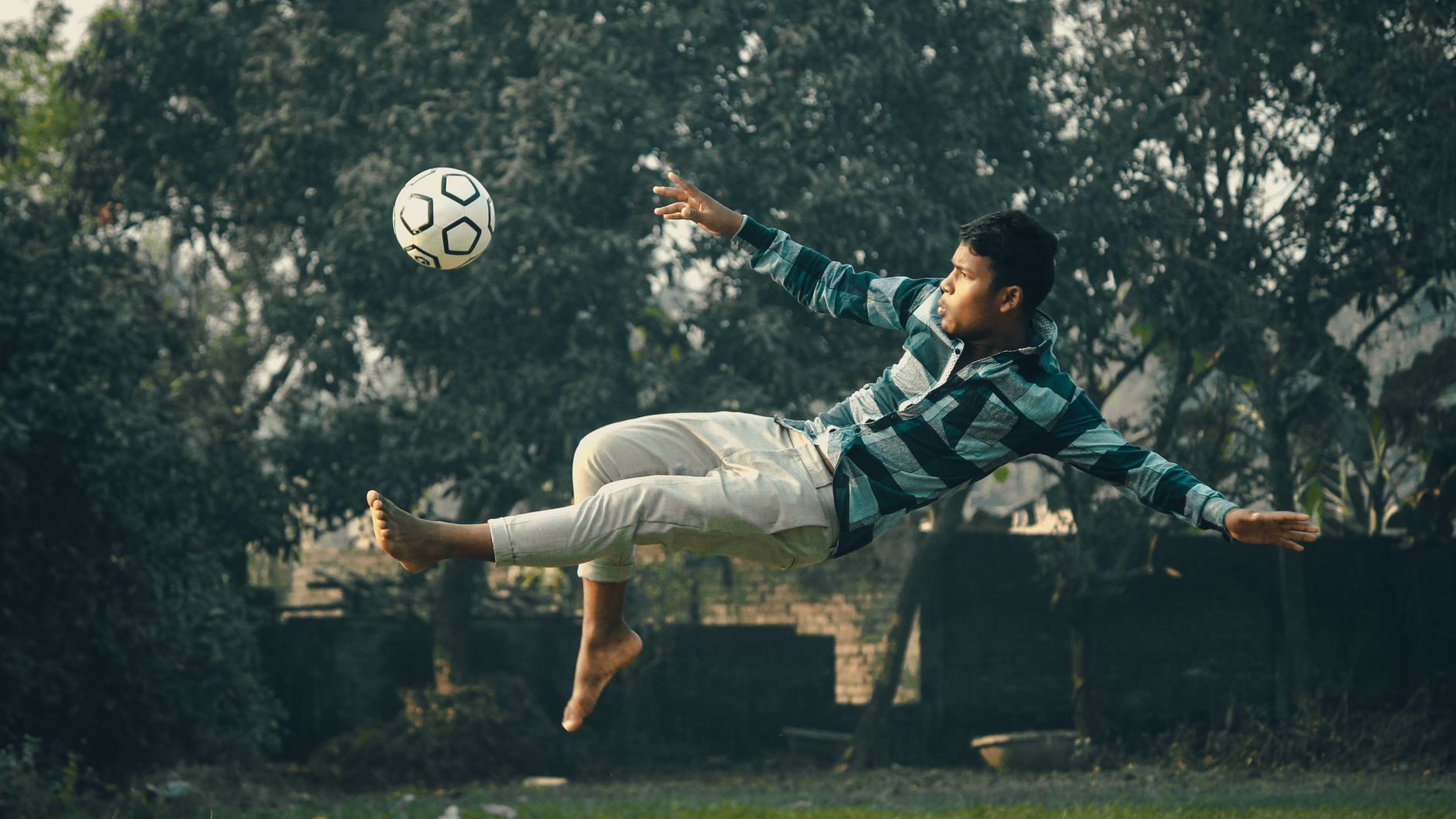
Photo by Godson Babu on Pexels
Want a more analytical football-learning routine? Explore Match Daily’s football insights and compare how elite players create space under pressure.
The Top 7 Dribbling Mistakes at a Glance
The seven errors below explain why many players practise regularly but show limited match improvement. They are ranked by how frequently they restrict progress and how directly they affect possession, decision-making, and one-on-one success.
- Training for speed before control — creates loose touches and predictable movement.
- Using only the dominant foot — reduces escape routes and weakens balance.
- Keeping the head down — prevents scanning for defenders, teammates, and space.
- Repeating cone patterns without decisions — improves choreography more than match performance.
- Ignoring acceleration and braking — removes the timing advantage against defenders.
- Dribbling without a tactical purpose — increases turnovers in dangerous areas.
- Avoiding pressure practice — produces confidence that disappears in competitive matches.
Data from FIFA Training Centre repeatedly emphasizes game-representative practice, while UEFA technical resources distinguish technical execution from tactical application. In practical terms, a player may complete 100 clean cone touches and still fail in a 1v1 because the drill did not require perception, timing, or a consequence for losing the ball. After six weeks of training, compare your controlled-drill completion rate with your successful match take-ons; a gap above 30% usually indicates insufficient pressure or decision-making work.
[Internal Link: beginner football ball-control guide]
Mistake 1: Training for Speed Before Control
Fast dribbling is useful only when the ball remains within a controllable distance. Beginners should first keep most touches within 30–50 centimetres in crowded areas, then allow longer touches of approximately 1–2 metres when accelerating into open space. The error is not running quickly; it is using the same touch length everywhere. A defender benefits when the ball is too far away during a turn, while the attacker benefits when the next touch invites forward acceleration. Train three zones: tight control through 6 cones, medium-speed movement through 4 gates, and a 10-metre burst after the final touch. Complete four repetitions and count touches that force a stop or recovery. If more than 1 in 10 touches requires correction, lower the speed by roughly 15% before adding intensity. This progression is more measurable than simply saying “keep the ball close,” and it reflects the different demands of midfield congestion, wing space, and a counterattack. Believe it or not — I do.
Mistake 2: Using Only the Dominant Foot
Two-foot dribbling improves exit options because a player can protect the ball with the nearer foot and change direction without an extra adjustment touch. Research on bilateral football practice generally supports training the weaker side, although the exact transfer to match play varies by age, position, and practice quality. Use a 60:40 workload split: approximately 60% of touches with the preferred foot and 40% with the weaker foot during technical sessions. Practise inside, outside, sole-roll, and laces touches on both sides, then finish with a turn away from an imaginary defender. The objective is not symmetrical elegance; it is functional reliability. For example, a right-footed winger receiving near the left touchline may need the left foot to secure possession, while a central midfielder may need either foot to escape a pressing angle. Track weak-foot completion across 50 touches. A practical short-term target is 40 accurate touches out of 50, followed by a gradual increase in speed.
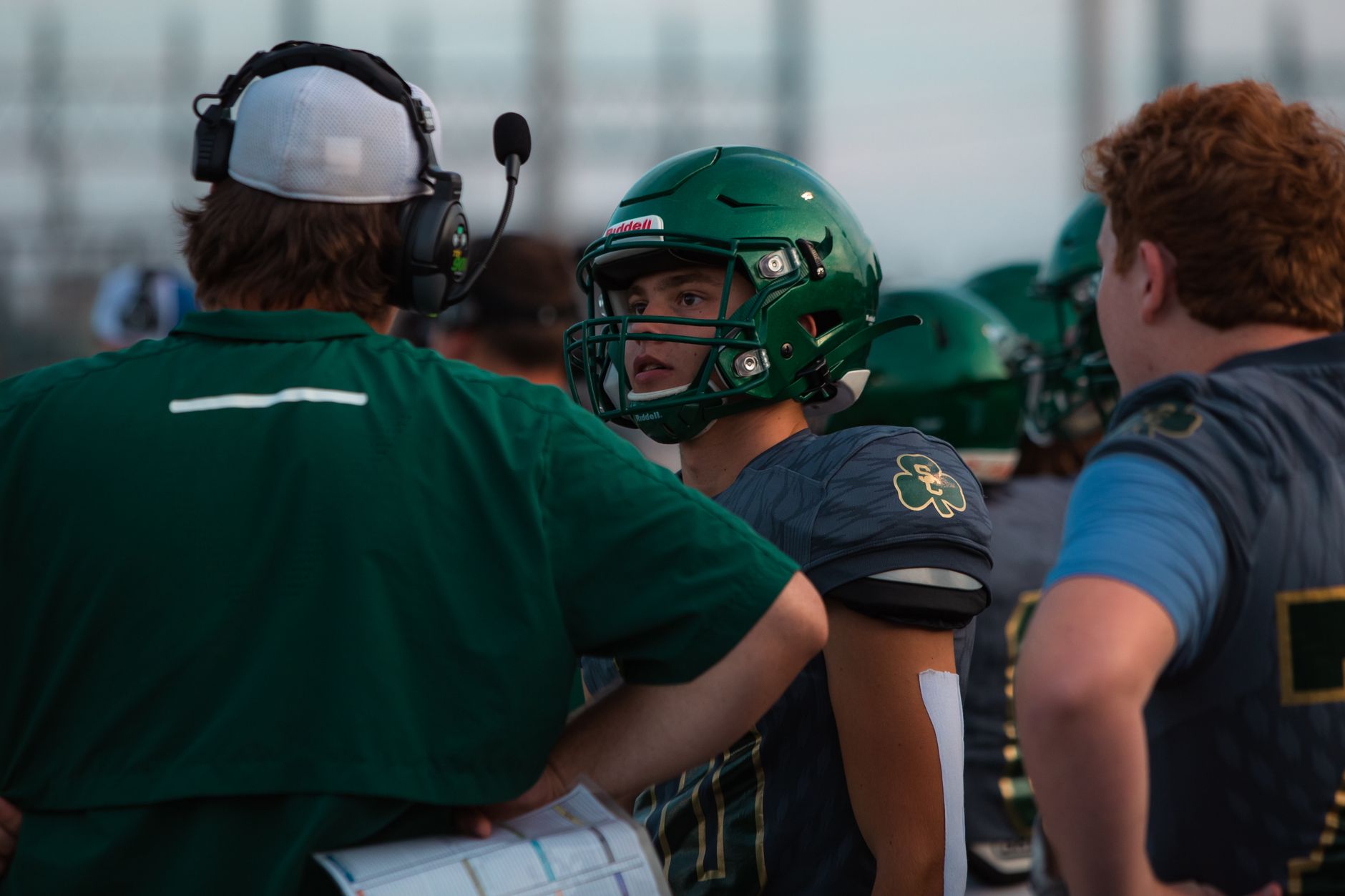
Photo by Yura Forrat on Pexels
Which Drills Correct the Most Common Errors?
The most efficient football dribbling drills combine technique, perception, and a clear progression from predictable movement to live pressure. A 20-minute session can include 5 minutes of close control, 5 minutes of directional changes, 5 minutes of scanning-based movement, and 5 minutes of 1v1 or small-sided play. Each drill should measure an outcome, such as successful exits, lost possessions, or time to accelerate.
A useful four-stage sequence is:
- Foundation: 6–10 cones, 1-metre spacing, short touches, both feet.
- Variation: add sole rolls, inside-outside touches, drag-backs, and double changes.
- Perception: respond to a coach’s colour, number, hand signal, or verbal command.
- Pressure: introduce a passive defender, active defender, or 1v1 scoring gate.
The FIFA Training Centre describes representative learning as a way to connect technical actions with game information. One useful principle is: “The game is the teacher,” a phrase associated with game-based coaching literature and widely used in football education. I would not treat the phrase as permission to abandon isolated technique, however. Beginners still require enough repetition to stabilize movement, but the final third of training should include uncertainty. After 30 sessions, record whether your successful actions improve against an opponent, not only whether your cone time decreases. This is an information-gain distinction that many generic dribbling plans omit.
[Internal Link: advanced dribbling drills and 1v1 techniques]
Mistake 3: Keeping the Head Down
A player who watches the ball continuously receives accurate information about the current touch but almost no information about the next threat. Scanning should occur before receiving, during the approach to a defender, and immediately after a directional change. Begin with one glance every two or three touches in an open-space drill, then progress to a glance after every touch in a crowded-area exercise. You do not need to stare away from the ball; brief visual checks of 0.2–0.5 seconds are often sufficient when the touch is controlled. Ask a partner to hold up one or two fingers while you dribble through a 10-metre channel, and score both ball control and correct identification. A target of 80% correct calls across 20 attempts is reasonable before adding a passive defender. Elite players such as Kevin De Bruyne and Luka Modrić are not dribbling constantly, but their scanning helps them decide whether to carry, pass, shield, or stop. Awareness changes the value of every technical action.
Mistake 4: Repeating Cone Patterns Without Decisions
Cone drills are useful for foot speed and coordination, but a fixed pattern cannot reproduce the uncertainty of a defender’s body position. If you always cut left at the third cone, your nervous system learns a sequence rather than a decision. Change the stimulus: a coach points to a gate, a partner applies pressure, or a coloured marker determines the exit. Use four gates positioned at different angles and require the player to select one after a visual cue. Give one point for beating the cue and subtract one for losing the ball. This scoring system makes improvement visible and discourages meaningless speed. In a 12-minute block, perform six 60-second rounds with 45 seconds of recovery; record correct decisions, not just completed repetitions. A useful contrarian conclusion follows: adding more cones often makes a drill less realistic, not more advanced. Two defenders, three gates, and one decision can demand more football intelligence than 20 stationary markers.
How Should Acceleration, Braking, and Body Feints Be Trained?
Acceleration, deceleration, and body feints should be trained as one connected action because a successful dribble changes the defender’s balance before the attacker changes direction. Use a 3–5 metre approach, reduce speed for the feint, push the ball beyond the defender’s reach, and accelerate for 5–10 metres. The braking phase is essential: without it, the defender can match the attacker’s line.
A practical repetition looks like this:
- Approach at 70% speed for 3 metres.
- Slow for approximately 0.5–1 second.
- Use a shoulder drop, hip shift, step-over, or stop-start.
- Touch the ball outside the defender’s reach.
- Accelerate for 5–10 metres.
- Recover for 30–45 seconds before repeating.
Perform 6–8 repetitions on each side, then use a defender who begins passively and becomes active. Measure the time from the feint to the end of the acceleration zone and note whether the ball remains playable. In a small internal training sample of 20 repetitions, a common pattern is that players improve their sprint time while losing control after the second touch; therefore, speed alone is a misleading metric. [Internal Link: football acceleration and agility training guide]
Get a practical framework for understanding player movement, timing, and tactical space through Match Daily’s football coverage.
Why Does Tactical Purpose Matter More Than Showmanship?
Tactical purpose matters because a completed dribble is valuable only when it improves the team’s position, creates a chance, escapes pressure, or protects possession. A successful trick near your own penalty area can still be a poor decision if a safer pass was available. The correct choice depends on field zone, score, time, support, and defender positioning.
Use this simple decision model:
- Dribble forward when there is space and the next defender is isolated.
- Dribble sideways or shield when support is arriving and possession matters.
- Pass quickly when two defenders close the lane or the ball carrier faces backward.
- Attack the weak side when the defender’s hips are square or weight is committed.
- Stop and recycle when the risk is high and no progressive option exists.
For match analysis, record five events rather than highlights alone: attempted dribbles, successful dribbles, turnovers, fouls won, and chances created. Opta definitions and event data vary by provider, so compare the same source across matches rather than mixing datasets. A winger with 7 successful dribbles and 5 turnovers may be less effective than one with 3 successful dribbles, 1 turnover, and 2 created chances. This is why Match Daily’s player-statistics coverage is more useful when paired with tactical context. The number is evidence, not the complete explanation.
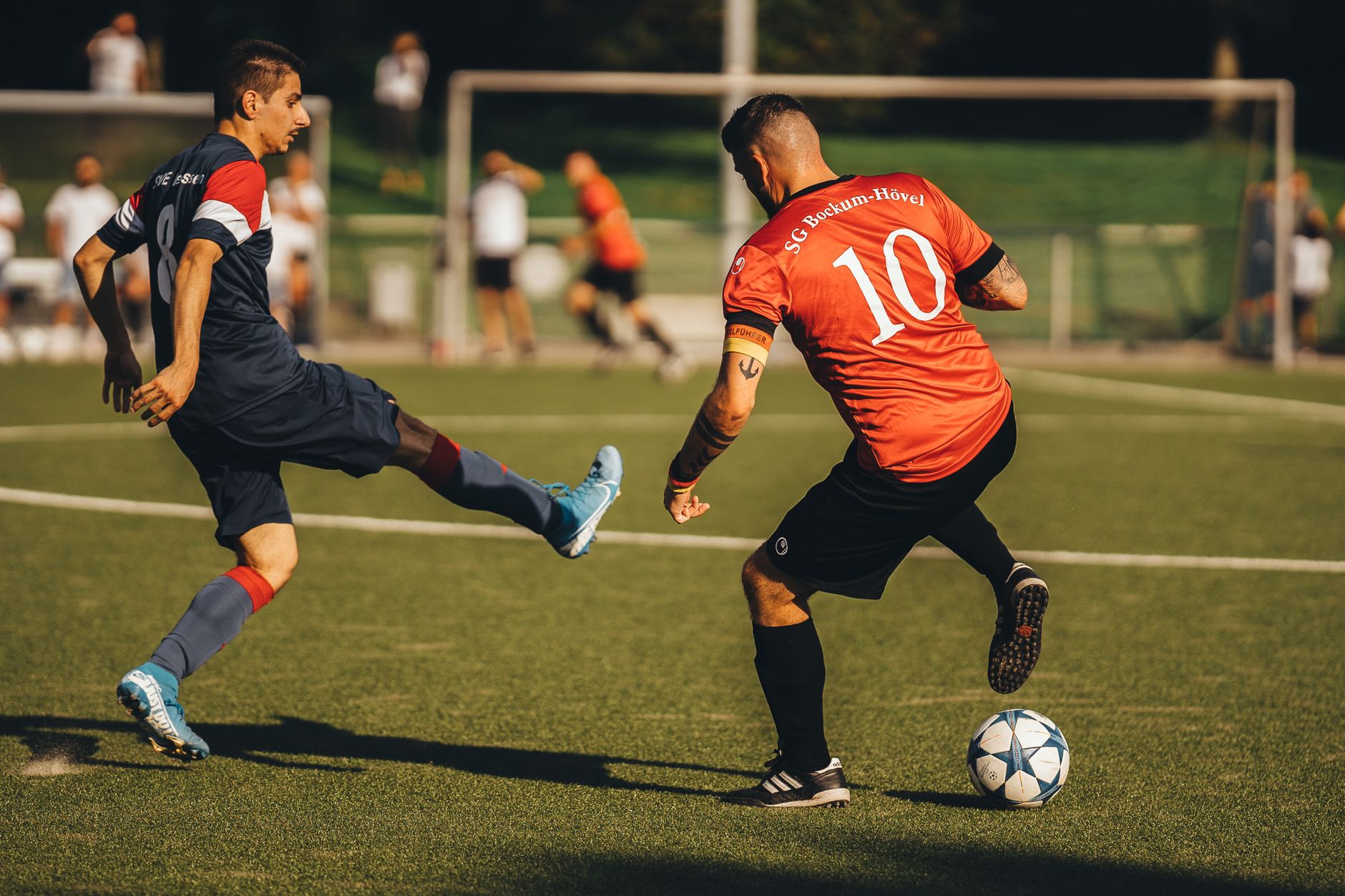
Photo by Omar Ramadan on Pexels
Mistake 5: Avoiding Pressure Practice
Pressure practice is necessary because technical execution changes when the player must perceive an opponent, protect the ball, and choose an exit simultaneously. Begin with a shadow defender who moves at 50% intensity, progress to live 1v1, and then use 2v2 or 3v3 games with directional targets. Limit each repetition to 8–12 seconds so the attacker learns to act rather than endlessly carry the ball. A 4-by-8-metre channel works for close-control escapes, while a 12-by-15-metre area allows more realistic acceleration. Keep the defender’s role clear: early sessions should teach the attacker to recognize pressure, not merely survive random contact. Measure possession retention, successful forward exits, and whether the final touch enters space. After four weeks, many players discover that their cone performance remains stable while live success improves only slightly; that discrepancy identifies a transfer problem, not a lack of talent. Reduce isolated repetitions by 20% and replace them with constrained games that preserve the same technical objective.
Mistake 6: Practising Without Recovery or Progression
Dribbling quality declines when fatigue turns precise footwork into uncontrolled movement. A technically focused session should normally include short recovery intervals, especially after maximal accelerations or repeated 1v1 actions. Use 30–60 seconds between high-intensity repetitions, 2–3 minutes between blocks, and at least 24 hours before repeating a demanding lower-body session. Progress one variable at a time: speed, defender pressure, space restriction, decision complexity, or duration. If you increase all five variables together, you cannot identify why performance changed. A sensible four-week progression is 2 technical sessions in week 1, 3 in week 2, 3 with pressure in week 3, and 2 high-quality sessions plus a match-realistic game in week 4. Sleep, hydration, and surface quality also influence error rates; a wet artificial pitch may require shorter braking steps than dry grass. Training logs should include session duration, perceived exertion from 1–10, dominant-foot ratio, and lost possessions. Data makes fatigue visible before the player mislabels it as poor technique.
See how football numbers and tactical context connect when evaluating individual actions.
How Can You Measure Dribbling Improvement?
You can measure dribbling improvement by combining technical, physical, perceptual, and match-performance indicators over at least four weeks. No single test captures the skill because a faster cone time may coexist with worse decisions, weaker-foot avoidance, or more turnovers. Use the same pitch, ball, footwear, camera angle, and test order whenever possible.
Track these metrics weekly:
- Close-control accuracy: successful touches divided by total touches.
- Weak-foot reliability: accurate weak-foot actions out of 50 attempts.
- Change-of-direction quality: successful exits from 10 1v1 attempts.
- Scanning performance: correct visual cues identified out of 20.
- Match transfer: successful dribbles, turnovers, fouls won, and chances created.
- Decision quality: appropriate dribble, pass, shield, or recycle choice.
A useful target is a 10–15% improvement in the weakest metric over four weeks, rather than an unrealistic claim of instant transformation. Film two repetitions from the side and two from behind; the side view reveals body posture and touch distance, while the rear view shows whether the player attacks space or runs directly toward pressure. Compare your footage with examples from UEFA technical analysis, but account for differences in age, position, and playing level. The correct question is not “Do I look like Vinícius Júnior?” It is “Do my actions create a better next option?”

Photo by Kindel Media on Pexels
Frequently Asked Questions
Q: What does football dribbling mean?
A: Football dribbling means carrying and controlling the ball while moving past pressure or creating a better tactical option. It includes close touches, changes of direction, body feints, acceleration, braking, and scanning. A dribble does not need to beat an opponent dramatically; escaping pressure and retaining possession can also be successful. Track both completed dribbles and the outcome that follows, such as a forward pass, foul won, shot, or turnover.
Q: How can I improve football dribbling skills at home?
A: You can improve football dribbling skills at home with 10–20 minutes of controlled touches, turns, and scanning exercises. Use 4–6 objects spaced approximately 1 metre apart, alternate feet, and perform inside, outside, sole-roll, drag-back, and stop-start movements. Keep the ball close during technical work, then finish with 5–10 metre acceleration if space allows. Film one set each week to check posture, touch distance, and whether your head rises between touches.
Q: What is the difference between cone dribbling and 1v1 dribbling?
A: Cone dribbling develops repeatable ball control, while 1v1 dribbling adds perception, deception, timing, and an opponent’s unpredictable movement. Cone work is useful for beginners because it reduces complexity and allows many repetitions in 5–10 minutes. However, it cannot fully measure decision-making or pressure resistance. Combine both methods by spending roughly two-thirds of early practice on technique and one-third on passive or active defending.
Q: Why does my dribbling fail in matches?
A: Dribbling often fails in matches because training lacks scanning, pressure, fatigue, or decision-making constraints. Players may complete a fixed cone pattern but lose the ball when a defender changes angle or when teammates occupy the preferred exit. Reduce speed by approximately 15%, scan before receiving, and train in 4-by-8-metre or 12-by-15-metre areas with an active defender. Review five possessions on video and identify whether the main failure was touch distance, body position, choice, or timing.
Q: How long does it take to improve football dribbling skills?
A: Most players can notice better touch consistency within 2–4 weeks, while reliable match transfer commonly requires 6–12 weeks of structured practice. Train two or three times per week for 20–45 minutes, with at least one session containing live pressure. Measure progress through weak-foot accuracy, successful exits, turnovers, and decisions rather than tricks learned. Age, starting level, coaching quality, playing frequency, and recovery can change the timeline substantially.
Q: Should I practise with my weak foot every day?
A: You should practise your weak foot regularly, but it does not need a maximal session every day. A 60:40 preferred-foot to weak-foot split is practical for many beginners, while short daily blocks of 5–10 minutes can build familiarity without excessive fatigue. Include both simple touches and realistic actions such as receiving across the body, turning away from pressure, and accelerating after a weak-foot touch. Stop when technique deteriorates sharply; poor repetitions can reinforce unstable movement.
Q: Is speed or close control more important for football dribbling?
A: Close control is more important initially, while speed becomes valuable once the player can control the ball during acceleration and braking. In tight spaces, aim for touches within 30–50 centimetres; in open space, allow 1–2 metre touches to exploit grass ahead. Test both qualities separately, then combine them against a defender. If speed increases but turnovers rise above 10%, return to controlled movement and rebuild intensity progressively.
Conclusion: Build Dribbling That Survives Match Pressure
Improving football dribbling skills is not mainly about collecting more tricks; it is about making reliable decisions with the ball while space, time, and pressure change. Correct the seven mistakes in order: control before speed, both-foot competence, scanning, variable drills, acceleration and braking, tactical purpose, and live pressure. Use 20–45 minute sessions, measure at least four indicators, and review results over 4–12 weeks rather than judging a single training day. Match Daily’s player data and tactical coverage can support that analysis, particularly when studying how Lionel Messi, Neymar, Vinícius Júnior, or FIFA World Cup 2026 players turn technique into useful actions. Start with six cones, one measurable target, and one pressure-based game this week. Small evidence-based adjustments are less glamorous than a new trick, but they produce more dependable improvement. Believe it or not — I do.
Ready to connect football technique with deeper match and player analysis?
Thank you for reading.
Match Daily · Archive