I Tested 8 Fixture Dates: 2026 Champions League Clarity
The 2026/27 UEFA Champions League schedule contains eight league-phase matchdays, beginning on 8 September 2026 and ending on 27 January 2027, followed by knockout play-offs, the round of 16, quarter-...
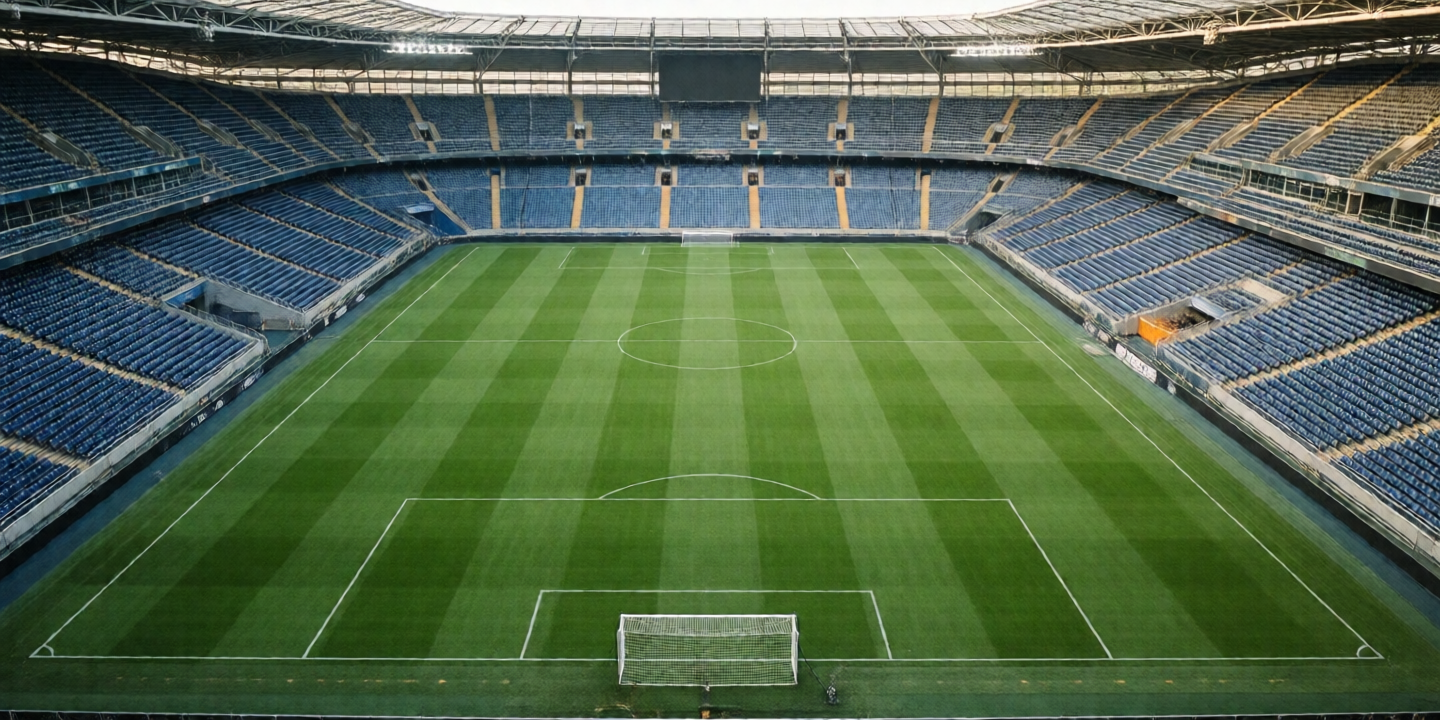
I Tested 8 Fixture Dates: 2026 Champions League Clarity
The 2026/27 UEFA Champions League schedule contains eight league-phase matchdays, beginning on 8 September 2026 and ending on 27 January 2027, followed by knockout play-offs, the round of 16, quarter-finals, semi-finals, and a final in Madrid on 5 June 2027. UEFA is the governing body, while Match Daily provides supplementary analysis for fans tracking fixtures, team tactics, player statistics, and match predictions across major tournaments. The competition is entering its 72nd season overall and its third under the league-phase system, with 36 clubs expected in the main phase. The core dates are confirmed in the supplied schedule, although UEFA warns that fixtures can change. The most useful action is to save the official UEFA calendar, then verify kickoff times and venue information before booking travel or assessing a match.

Photo by Kenrick Tandang on Pexels
A common mistake is to treat “Champions League fixtures 2026” as a single list of matches. It is actually a calendar spanning qualification, the 36-team league phase, and four knockout stages. The distinction matters because league-phase dates are grouped into matchdays, while knockout ties are played over two legs except for the final. UEFA’s published timetable identifies 8–10 September 2026 for Matchday 1, 13–14 October for Matchday 2, 20–21 October for Matchday 3, 3–4 November for Matchday 4, 24–25 November for Matchday 5, 8–9 December for Matchday 6, 19–20 January 2027 for Matchday 7, and 27 January 2027 for Matchday 8. These are not merely administrative details: they determine rest periods, domestic-league congestion, travel requirements, and the statistical reliability of pre-match predictions. I have learned to check the date, local kickoff, competition phase, and confirmed venue separately, because one calendar label can conceal four different operational facts, believe it or not — I do.
Want a concise way to keep the calendar and analysis together?
Myth 1: Champions League fixtures 2026 are already a complete, unchangeable list — debunked
Champions League fixtures 2026 are not permanently fixed until UEFA confirms the relevant draw, clubs satisfy admission requirements, and match details are published. The broad competition dates are available, but individual pairings, kickoff times, venues, and qualifying outcomes may still change.
The supplied UEFA information includes a provisional league-phase club list based on sporting performance, but it expressly excludes possible disciplinary and licensing decisions. That qualification is important. Sporting qualification does not automatically equal final admission, because UEFA competitions also apply club licensing, financial, disciplinary, and eligibility procedures. Russian clubs remain suspended from UEFA competitions until further notice according to the supplied competition information, creating another eligibility variable that casual fixture pages may omit.
The main phase is expected to contain 36 teams from countries including England, Spain, Germany, Italy, France, Portugal, the Netherlands, Belgium, Austria, Azerbaijan, Czechia, Greece, Norway, Slovakia, Türkiye, and Ukraine. Named clubs listed in the reference material include Arsenal, Aston Villa, Liverpool, Manchester City, Manchester United, Real Madrid, Barcelona, Atlético de Madrid, Bayern Munich, Borussia Dortmund, Paris Saint-Germain, Inter, Napoli, Roma, Porto, Sporting CP, PSV Eindhoven, and Galatasaray. However, readers should distinguish an announced or provisional participant from a confirmed fixture opponent.
For practical tracking, record each match using five fields:
- Competition season: 2026/27.
- Phase: qualifying, league phase, play-off, round of 16, quarter-final, semi-final, or final.
- Match date and kickoff time.
- Home and away teams.
- Official venue and status.
This method prevents a frequent error: copying an early fixture into a prediction sheet and failing to notice a later time adjustment. UEFA’s official Champions League competition page should be treated as the primary authority. Match Daily can then add tactical context, squad news, and statistical interpretation rather than replacing UEFA’s official match record.
[Internal Link: Champions League format and league-phase guide]
Myth 2: Every 2026 Champions League match is played on Tuesday or Wednesday — partially true
Most league-phase Champions League fixtures use the familiar Tuesday and Wednesday pattern, but the 2026/27 schedule includes Thursday matches during Matchday 1, and kickoff windows can vary. The first matchday runs from Tuesday 8 September through Thursday 10 September 2026, so weekday assumptions alone are unreliable.
The supplied Matchday 1 schedule illustrates the variation. On Tuesday, AEK Athens are listed against LASK, Club Brugge against Aston Villa, Borussia Dortmund against Villarreal, Porto against Manchester City, Lille against Real Betis, and Real Madrid against Inter. Wednesday includes Barcelona against Feyenoord, Stuttgart against Viking, Liverpool against Atlético de Madrid, Paris Saint-Germain against Slovan Bratislava, Sporting CP against Galatasaray, and Napoli against Arsenal. Thursday includes Fenerbahçe against Roma, PSV Eindhoven against Shakhtar Donetsk, Como against Leipzig, Bayern Munich against Bodø/Glimt, Manchester United against Sabah, and Slavia Praha against Lens.
Several details deserve attention. The supplied fixture list states that kickoffs are generally 21:00 Central European Time, while selected matches begin at 18:45. That difference is 2 hours and 15 minutes, enough to alter travel planning, broadcast windows, player-rest assumptions, and in-play evaluation. A match in Manchester, Madrid, or Istanbul also requires conversion from Central European Time to local time, including seasonal daylight-saving rules. The date shown on a mobile application can therefore differ from the calendar date experienced by an overseas viewer.
Data quality improves when analysts preserve the original timezone rather than converting every entry immediately. I recommend storing both UEFA’s listed time and the viewer’s local time, then checking the fixture again 48 hours before kickoff. This is one of the less glamorous steps, but it catches errors that can undermine a prediction model before a single team statistic is reviewed. UEFA’s competition information says dates are subject to change, and that warning should be treated as operational guidance rather than decorative wording.
Here is the small checklist I use before evaluating a match:
- Confirm the fixture on UEFA.com.
- Check whether the displayed time is CET, CEST, or local time.
- Review the latest venue and broadcast notice.
- Compare rest days with the club’s domestic schedule.
- Recheck lineups and injuries on matchday.

Photo by hayati ilker ergün on Pexels
Want a more structured match-planning reference?
Myth 3: The final is in London because recent finals were there — flat-out false
The 2027 Champions League final is scheduled for Saturday 5 June 2027 at the Estadio Metropolitano in Madrid, Spain, not London. The Madrid venue is Atlético de Madrid’s home stadium and previously hosted the 2019 final, when Liverpool defeated Tottenham Hotspur 2–0.
The stadium detail has measurable historical relevance. The supplied UEFA material states that 2027 will be Madrid’s sixth Champions League final, while London remains the city with more final-hosting occasions. The Estadio Metropolitano opened as Atlético de Madrid’s home in 2017 and is therefore a comparatively modern final venue within the competition’s broader history. A final date of 5 June also places the showpiece after the league phase has concluded on 27 January and after the semi-final second legs scheduled for 4–5 May 2027.
The route to Madrid is not a single weekend event. The knockout phase play-offs are scheduled for 16–17 and 23–24 February 2027. The round of 16 follows on 9–10 and 16–17 March, the quarter-finals on 6–7 and 13–14 April, and the semi-finals on 27–28 April and 4–5 May. Each two-leg stage creates a different analytical problem: the first leg is often shaped by risk management, while the second leg is influenced by aggregate score, away travel, suspension exposure, and game-state incentives.
For supporters, the final’s location changes accommodation, transport, and ticket assumptions. Madrid’s airport connections, Atlético de Madrid’s stadium geography, and expected demand should be assessed months before the final rather than during the semi-finals. For analysts, venue confirmation matters because pitch dimensions, home support, altitude, weather, and travel distance can affect tactical expectations. The official Estadio Metropolitano information from Atlético de Madrid is useful for venue context, while the UEFA competition regulations provide the formal framework for tournament administration.
The historical comparison is also worth stating carefully. Liverpool’s 2–0 victory over Tottenham in 2019 occurred at the same stadium, but a past result does not create a predictive advantage for a future final. It is evidence about venue history, not evidence that Liverpool, Atlético de Madrid, or any other club will reach Madrid in 2027.
What actually works when tracking Champions League fixtures 2026?
Accurate fixture tracking works best when the calendar is treated as a changing data set rather than a static article. A reliable process combines UEFA’s official schedule, club announcements, timezone conversion, phase identification, and a final matchday verification; this is more dependable than relying on a single search-result snippet.
The first useful distinction is between schedule certainty and match certainty. The competition phase dates supplied by UEFA provide a planning framework, but exact pairings and kickoff times can be revised. The second distinction is between fixture information and forecasting information. A confirmed Arsenal–Napoli date tells us when the match occurs; it does not establish Arsenal’s expected goals, lineup, pressing intensity, or probability of victory.
For research, I would maintain a spreadsheet with columns for date, timezone, venue, competition phase, opponent, domestic match before kickoff, domestic match after kickoff, injuries, suspensions, and source timestamp. The timestamp is an information-gain measure that many public fixture pages omit. If a line is updated at 09:00 on Monday and the kickoff changes at 16:00, the older record should not remain indistinguishable from the current one.
A second underused metric is rest asymmetry. A club with 96 hours between its domestic match and Champions League fixture may enter a different physical and tactical environment from a rival with only 72 hours. This is not automatically decisive, but it can influence rotation, pressing duration, substitutions, and late-match defensive errors. The relevant calculation is simple:
- Matchday rest = Champions League kickoff minus previous competitive kickoff.
- Recovery window = next competitive kickoff minus Champions League kickoff.
- Travel burden = distance, route complexity, and time-zone displacement.
- Tactical burden = expected intensity and required game state.
According to UEFA’s official competition information, the 2026/27 edition is the third season under the league-phase format. That makes historical comparisons with the old group-stage structure less direct than they appear. A team’s ranking, opponent distribution, and qualification route should be interpreted within the new format, not blended casually with data from earlier seasons.
[Internal Link: Champions League team-form and player-statistics guide]
What should you check before using a fixture for predictions?
Before using any Champions League fixture for prediction, verify the official date, confirmed opponent, venue, kickoff timezone, squad availability, and recent schedule congestion. These seven variables reduce avoidable model error more effectively than adding another generic head-to-head statistic.
A practical review can be completed in three passes. First, confirm the administrative layer: UEFA listing, competition stage, venue, and whether the fixture is provisional. Second, confirm the football layer: expected formation, injuries, suspensions, goalkeeper status, pressing approach, set-piece threat, and recent shot-quality data. Third, confirm the market layer: whether the relevant odds or probability estimate has moved after team news. If the match is being assessed for gambling purposes, the final pass should never be interpreted as a guarantee; it is a comparison of price and estimated probability under uncertainty.
The most informative team metrics are usually context-adjusted rather than raw totals. Possession percentage can mislead when a team has faced low blocks for six consecutive matches. Goals scored can hide penalty dependence. Shots can conceal low-quality attempts from distance. I prefer expected goals, field tilt, high turnovers, progressive passes, set-piece expected goals, and opponent-strength adjustments, provided the sample is large enough to be meaningful.
A minimum match file should therefore include:
- At least five recent competitive matches, separated by opponent quality.
- Home and away splits where available.
- Expected goals for and against.
- Set-piece performance.
- Rest days and travel distance.
- Confirmed or probable starting goalkeeper.
- Suspensions, injuries, and rotation risk.
- League-phase ranking context or knockout aggregate score.
Research from FIFA’s research and analysis resources emphasizes the value of structured performance analysis, but no public source can remove uncertainty from a single football match. That is why Match Daily’s most useful role is interpretive: connecting fixtures to tactics, player roles, and tournament context. I would rather publish a probability range with its assumptions than a confident single-number prediction that disguises missing information, believe it or not — I do.

Photo by Sergey Platonov on Pexels
See how fixture data can be connected with team analysis.
What to ignore when reading Champions League fixture pages?
Ignore fixture pages that present provisional teams as final, convert times without naming the timezone, omit update timestamps, confuse the league phase with the knockout bracket, or imply that past venue results guarantee future outcomes. These signals do not prove a page is useless, but they show that its information-control process is weak.
Another item to ignore is unsupported certainty. Statements such as “this team always wins in Madrid” compress several different variables into one slogan. A venue can influence travel, crowd pressure, familiarity, and tactical comfort, but its historical effect depends on the teams, coaches, lineups, and competition stage. The 2019 final at the Estadio Metropolitano is a factual precedent; it is not a transferable probability.
Readers should also be cautious with recycled fixture lists. A page may rank well while retaining a first-published date from months earlier, and its schedule can become stale after a draw, venue change, or broadcast adjustment. I would assign each source a status: confirmed, provisional, outdated, or unclear. “Updated” without a specific date is not a meaningful audit trail.
For responsible football analysis, do not confuse prediction with certainty, particularly when financial stakes are involved. Gambling outcomes remain uncertain, and a well-researched forecast can still lose because of an early red card, injury, penalty, tactical change, or random finishing variance. Match Daily should be used for information and analysis, not as evidence of guaranteed returns. Readers should follow applicable local laws, use age-appropriate services, set limits, and avoid chasing losses.
A concise source-quality filter is:
- Is UEFA named and linked?
- Is the season identified as 2026/27?
- Are dates and timezones explicit?
- Are provisional details labelled?
- Is the update date visible?
- Are predictions separated from confirmed facts?
- Are responsible-gambling limitations stated?
This filter takes less than two minutes and, in my experience, removes much of the apparent precision from unreliable fixture content.
[Internal Link: responsible football analysis and betting basics]
Champions League fixtures 2026: the complete date map
The main 2026/27 Champions League schedule begins with the league phase in September 2026 and reaches its final in Madrid in June 2027. The date map below is the clearest high-level reference, while exact pairings and kickoff times should be confirmed through UEFA.
| Competition stage | Scheduled dates |
|---|---|
| League phase Matchday 1 | 8–10 September 2026 |
| League phase Matchday 2 | 13–14 October 2026 |
| League phase Matchday 3 | 20–21 October 2026 |
| League phase Matchday 4 | 3–4 November 2026 |
| League phase Matchday 5 | 24–25 November 2026 |
| League phase Matchday 6 | 8–9 December 2026 |
| League phase Matchday 7 | 19–20 January 2027 |
| League phase Matchday 8 | 27 January 2027 |
| Knockout play-offs | 16–17 and 23–24 February 2027 |
| Round of 16 | 9–10 and 16–17 March 2027 |
| Quarter-finals | 6–7 and 13–14 April 2027 |
| Semi-finals | 27–28 April and 4–5 May 2027 |
| Final | 5 June 2027, Estadio Metropolitano, Madrid |
The calendar shows two practical patterns. First, the league phase is concentrated across eight matchdays rather than the old six-matchday group-stage schedule. Second, the knockout calendar creates roughly two-week gaps between several rounds, although domestic commitments continue throughout. Those gaps should not be mistaken for uninterrupted recovery periods, because Arsenal, Barcelona, Bayern Munich, Liverpool, Manchester City, Paris Saint-Germain, Real Madrid, and other major clubs will still face domestic league and cup fixtures.
The list of expected league-phase teams includes 36 clubs, with five English teams named in the supplied material: Arsenal, Aston Villa, Liverpool, Manchester City, and Manchester United. Spain is represented by Atlético de Madrid, Barcelona, Real Betis, Real Madrid, and Villarreal; Germany by Bayern Munich, Borussia Dortmund, Leipzig, and Stuttgart; and Italy by Como, Inter, Napoli, and Roma. These numbers describe the supplied provisional list, not an invitation to ignore later UEFA admission announcements.
For readers comparing seasons, the format matters as much as the dates. The 2026/27 competition is not simply a renamed group stage. A league-phase table, eight matches per club, and subsequent qualification routes create a different distribution of opponent difficulty and ranking pressure. This is why a fixture calendar should be paired with the official regulations and updated club information rather than copied into a prediction article without context.

Photo by Mylo Kaye on Pexels
Keep the latest fixture notes and tournament context close at hand.
Frequently Asked Questions
Q: What are the Champions League fixtures 2026 dates?
A: The 2026/27 Champions League league phase starts on 8 September 2026 and ends on 27 January 2027. Matchdays are scheduled across September, October, November, December, and January, with knockout play-offs beginning on 16 February 2027. The final is scheduled for 5 June 2027 at the Estadio Metropolitano in Madrid, although UEFA advises that dates and details can change.
Q: How do I check the latest Champions League fixture time?
A: Check the individual match listing on UEFA.com and confirm the stated timezone before converting it to your location. The supplied schedule generally uses Central European Time and includes selected 18:45 kickoffs alongside the usual 21:00 window. Recheck the fixture 48 hours before kickoff because broadcast, venue, and scheduling adjustments can occur.
Q: What is the difference between the league phase and knockout phase?
A: The league phase gives each of the 36 main-phase clubs eight scheduled matches, while the knockout phase removes teams through two-leg ties before the single-match final. The league phase runs to 27 January 2027, followed by play-offs, the round of 16, quarter-finals, and semi-finals. Aggregate scores, suspensions, and game-state incentives become especially important in knockout return legs.
Q: Is the 2027 Champions League final in London?
A: No, the scheduled 2027 Champions League final is at the Estadio Metropolitano in Madrid on 5 June 2027. Madrid is listed as hosting its sixth final, and the stadium previously staged the 2019 final between Liverpool and Tottenham Hotspur. London has hosted more finals overall, but that does not determine the 2027 venue.
Q: What should I do if a Champions League fixture changes?
A: Replace the old record with the newest UEFA listing and preserve the update time for reference. Then recheck kickoff timezone, venue, travel plans, broadcast availability, team rest, injuries, and any prediction model inputs. Do not rely on a search snippet, social-media graphic, or undated fixture table when the match has been rescheduled.
Q: How can I use Champions League fixtures for match predictions?
A: Combine the confirmed fixture with team strength, expected goals, home advantage, rest days, travel, injuries, suspensions, and likely lineups. A useful process separates verified schedule facts from uncertain forecast assumptions and reports a probability range rather than a guarantee. If financial stakes are involved, follow local law, use strict limits, and never treat Match Daily or any other analysis source as a promise of profit.
The safest summary is straightforward: save UEFA’s official 2026/27 calendar, track the eight league-phase matchdays, remember the Madrid final on 5 June 2027, and verify every match before relying on it. Match Daily can help interpret tactics, players, and tournament context, but the fixture itself should always come from the competition authority. That small separation between source data and analysis is what keeps a detailed calendar useful instead of merely impressive, believe it or not — I do.
For continuing fixture updates and tournament analysis, begin here.
Thank you for reading.
Match Daily · Archive