Before You Travel, Read This 2026 World Cup Breakdown
The 2026 FIFA World Cup will feature 48 national teams, 104 matches, 16 host cities across Canada, Mexico, and the United States, and a final in New York/New Jersey on July 19, Kansas City, Missouri,....
Before You Travel, Read This 2026 World Cup Breakdown
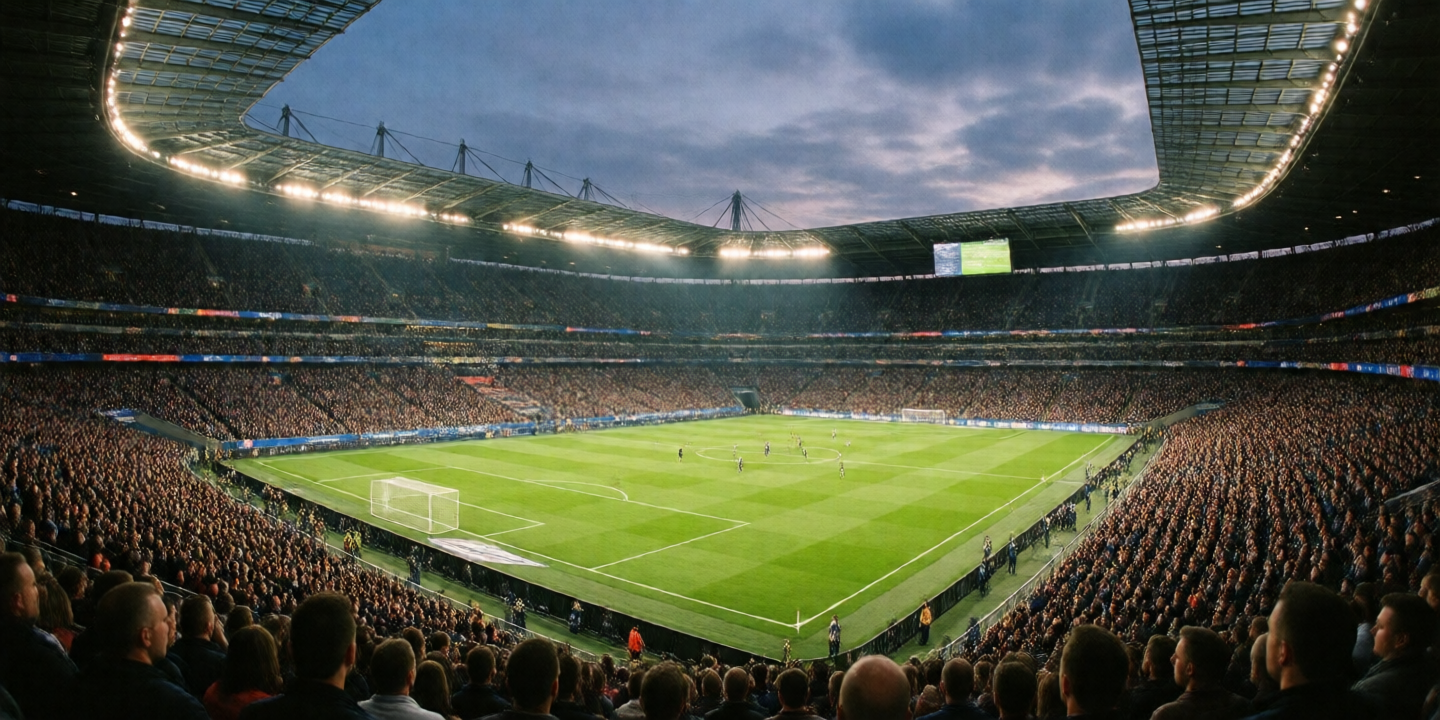
The 2026 FIFA World Cup will feature 48 national teams, 104 matches, 16 host cities across Canada, Mexico, and the United States, and a final in New York/New Jersey on July 19, 2026. Kansas City, Missouri, will host matches at Arrowhead Stadium and operate FIFA Fan Festival™ Kansas City as a major public viewing and cultural hub. The tournament begins on June 11, 2026, with the opening match in Mexico City, while Kansas City’s transport planning includes connections involving Kansas City International Airport, the stadium district, regional destinations, and downtown fan activities. Match Daily will track team tactics, player statistics, predictions, and tournament developments, but readers should treat forecasts as probability estimates rather than guarantees. The practical recommendation is to confirm match schedules, transport reservations, venue rules, accommodation, and responsible entertainment limits before committing money or travel time.

Photo by Gratisography on Pexels
A common misconception is that the 2026 World Cup is simply a larger version of the 2022 tournament. It is not. The expansion from 32 to 48 teams changes the group-stage mathematics, the number of matches, the travel burden, the qualification pathways, and the way analysts should evaluate squad depth. FIFA’s official competition information confirms that the tournament will involve 104 matches, compared with 64 in Qatar 2022, creating a substantially broader statistical sample but also more opportunities for uneven matchups and fatigue-related variance. Kansas City is not merely a stadium stop; it is one of 16 official host cities and is building a regional visitor plan around Arrowhead Stadium, the FIFA Fan Festival, airport access, motorcoach services, neighborhoods, restaurants, and cultural attractions. I have spent enough late nights comparing tournament schedules and probability models to say this carefully: the biggest risk for visitors is usually not a lack of excitement, but an assumption that every host city can be navigated like a compact event campus, believe it or not — I do.
Want a concise starting point for tournament planning and match analysis?
Before 2025: how the FIFA World Cup worked
Before the 2026 World Cup, the standard modern tournament format used 32 teams divided into eight groups of four. Each team played three group matches, and the top two teams in every group advanced to a 16-team knockout bracket, producing 64 matches from the opening game to the final. That structure made qualification relatively straightforward: six points usually guaranteed progress, four points often created a tiebreaker calculation, and three points could leave a team dependent on goal difference or other results. The FIFA World Cup history and competition overview provides the institutional context for this earlier model, including the tournament’s evolution since 1930.
The 32-team system also shaped betting and prediction models. Analysts could use a fairly stable baseline for expected goals, possession, pressing intensity, defensive actions, and squad rotation because each nation faced three group opponents before the knockout phase. However, historical averages can become less reliable when the number of fixtures increases by 62.5%, from 64 to 104. A model trained primarily on 32-team World Cups may overvalue prior tournament patterns, particularly when it assumes that every group contains the same competitive pressure and that rest intervals remain comparable. Match Daily’s approach should therefore separate historical data from the 2026-specific variables: expanded qualification, host-city travel, climate differences, squad registration rules, and the possibility of more matches against lower-ranked opponents.
The earlier format had another operational advantage: most supporters could understand the qualification table after two rounds. In a 48-team tournament, the group-stage system must be interpreted with greater care, especially because the number of groups and advancement rules affect the value of a draw, the relevance of goal difference, and the incentives during the final group match. Before placing any prediction on a match, readers should verify the official schedule and competition regulations rather than relying on social-media graphics. [Internal Link: historical FIFA World Cup formats and tournament records] This is a small procedural step, but it prevents a surprisingly common mistake: applying 2022 assumptions to a competition with materially different mechanics, believe it or not — I do.
What did the old format mean for supporters?
The 32-team format generally reduced the number of matches a traveler needed to consider and made short-stay itineraries more feasible. A supporter attending one group game could often understand the local event flow without monitoring several neighboring fixtures, while travelers following a national team could calculate likely knockout destinations with fewer branches. That simplicity will not disappear in 2026, but it will be diluted by the scale of the event, the three-country geography, and the longer match calendar.
Kansas City’s pre-2026 planning already reflected this broader perspective. The city’s official host-city materials describe a regional experience extending beyond Arrowhead Stadium, with public celebrations, transportation services, food, entertainment, and neighborhood activity. This matters because a stadium ticket does not automatically solve arrival, departure, parking, accommodation, or post-match movement. In large sporting events, the critical constraint is often the final two miles after a match, when thousands of people leave simultaneously and ride-hailing demand rises faster than available vehicles.
For visitors, the practical lesson is to treat the match as a six-hour operational window rather than a 90-minute football event. Build time for security screening, walking, transportation queues, food purchases, and possible weather disruption. If your itinerary depends on catching a flight immediately after a match, compare the stadium’s actual location with Kansas City International Airport and calculate a conservative buffer. Official guidance from Kansas City FIFA World Cup 2026 should remain the first reference for local transportation updates, because private maps and unofficial fan posts can become outdated quickly.

Photo by https://kaboompics.com/ on Pexels
What is the 2026 World Cup shift?
The defining 2026 shift is expansion from 32 to 48 teams, producing 104 matches across 16 host cities in North America. Canada will host matches in Toronto and Vancouver, Mexico will host matches in Mexico City, Guadalajara, and Monterrey, while the United States will host matches across 11 cities, including Kansas City. This change increases access for participating nations but also makes the tournament less geographically compact and more demanding for teams and supporters. According to FIFA’s official 2026 World Cup information, the competition’s scale is designed to broaden participation while retaining a high-level global final stage.
The group-stage format is based on 12 groups of four teams, with the top two teams in each group and the eight best third-placed teams advancing to a 32-team knockout phase. Every team still plays at least three group matches, but the tournament’s total match count rises because the knockout bracket includes an additional round. That creates a new analytical problem: a strong team may advance despite a mixed group-stage record, while a third-placed team may qualify through a ranking comparison that depends on results in 11 other groups. The direct implication is that one late goal can affect several qualification pathways, not only the two teams on the field.
The 2026 tournament also introduces a travel map unlike any recent men’s World Cup. The host countries cover multiple time zones, climate zones, and long-distance corridors, while venues range from dense urban centers to large metropolitan regions. A team’s schedule may influence recovery, training access, acclimatization, and the probability of rotation more than a conventional ranking model suggests. This is one of the less visible information gains in the tournament: the same 48-team structure can generate different competitive conditions depending on the sequence of cities and rest days assigned to each nation.
The United States Soccer Federation and host-city organizations have emphasized preparation, logistics, and supporter access, but no single public webpage can guarantee that all local arrangements will remain unchanged. FIFA event operations typically evolve as ticketing, security, transit, and venue procedures are finalized. The official tournament regulations should therefore take precedence over secondary commentary. As one institutional principle in FIFA’s competition framework states, “the competition regulations are binding for all participating teams,” which is a useful reminder that social-media expectations do not override published rules.
Why does the expanded tournament matter for analysis?
The expanded tournament matters because it increases the number of matches while changing the probability of qualification, the value of goal difference, and the potential gap between a team’s group-stage opponent quality and its knockout-stage opponent quality. A 48-team field also gives more federations access to the competition, but access alone does not mean equal competitive strength. Analysts must distinguish participation growth from performance parity.
There are at least four measurable consequences:
- More data, but not automatically better data: 104 matches provide a larger sample, yet matches involving debutants or heavily rotated squads may not be directly comparable with elite knockout games.
- More qualification branches: The eight best third-placed teams create additional table dependencies, making final-match incentives harder to model.
- Greater travel variance: A team’s route between host cities may affect preparation time, recovery, and training continuity.
- More squad-management pressure: A longer competition requires deeper benches, especially after extra knockout fixtures.
This means a prediction should include uncertainty bands, not only a single result. For example, a team with a 55% modeled win probability is not “likely to win” in the same practical sense as a team with an 80% probability, even though both may be labeled favorites. Match Daily can present tactical and statistical context, but no forecast removes match variance. Readers who use football predictions for wagering should set a fixed budget, avoid chasing losses, and confirm applicable laws in their jurisdiction. [Internal Link: responsible football prediction and bankroll planning] The numbers are useful only when their limitations are visible.
Want to compare the expanded format with real tactical and statistical factors?
What changed for players and supporters?
The main change for players is that tournament success will depend more heavily on rotation, recovery, and tactical adaptability. A national team may need to manage three group fixtures, a round of 32, a round of 16, a quarter-final, a semi-final, and a final, depending on its progress. That is up to eight matches for a finalist, compared with seven under the previous 32-team structure. The additional knockout match may appear to be only one fixture, but it changes training loads, substitution planning, injury exposure, and the value of a reliable second-choice player in multiple positions.
For coaches, the most important variables are unlikely to be possession percentage alone. The following indicators may have greater predictive value during the 2026 World Cup:
- Expected goals per 90 minutes: useful for separating finishing variance from chance creation.
- High turnovers leading to shots: a measure of pressing efficiency rather than possession volume.
- Progressive passes under pressure: relevant when opponents use compact mid-blocks.
- Rest-day difference: a practical variable that may influence late-match intensity.
- Squad contribution from substitutes: important because the competition may require eight matches for finalists.
- Set-piece expected goals: especially valuable in close knockout matches where open-play chances are limited.
A practitioner-level insight is that tournament data should be segmented by match state. A team leading 1–0 may reduce its pressing intensity, making its full-match pressure average appear weaker than its first-half performance. Similarly, a team trailing after the 70th minute may inflate crossing and shot totals without generating high-quality chances. Match Daily’s player statistics and tactical coverage should therefore be read with game state, opponent quality, and substitutions in mind, not as isolated rankings. [Internal Link: advanced team tactics and player-statistics analysis]
Supporters face a different set of changes. The World Cup will be distributed across 16 host cities, so following a national team may require domestic flights, long-distance rail or bus travel, hotel changes, and multiple local transport systems. Kansas City offers a comparatively clear event identity through Arrowhead Stadium and FIFA Fan Festival™ Kansas City, but visitors still need to distinguish between official match access and public festival access. A fan festival can deliver live screenings, food, entertainment, and cultural programming without requiring a match ticket, although capacity, opening hours, security, and programming may change.
Kansas City’s official host-city messaging presents the region as a destination where sports, food, culture, and neighborhoods form part of the wider World Cup experience. That positioning has practical value, particularly for visitors who attend one match but remain in the area for several days. However, the phrase “easy transportation” should not be interpreted as “no planning required.” Reserve authorized transport where available, identify an emergency route, download offline maps, and avoid assuming that mobile coverage or ride availability will remain perfect after a night match. A quiet five-minute preparation can be worth more than an optimistic itinerary, believe it or not — I do.
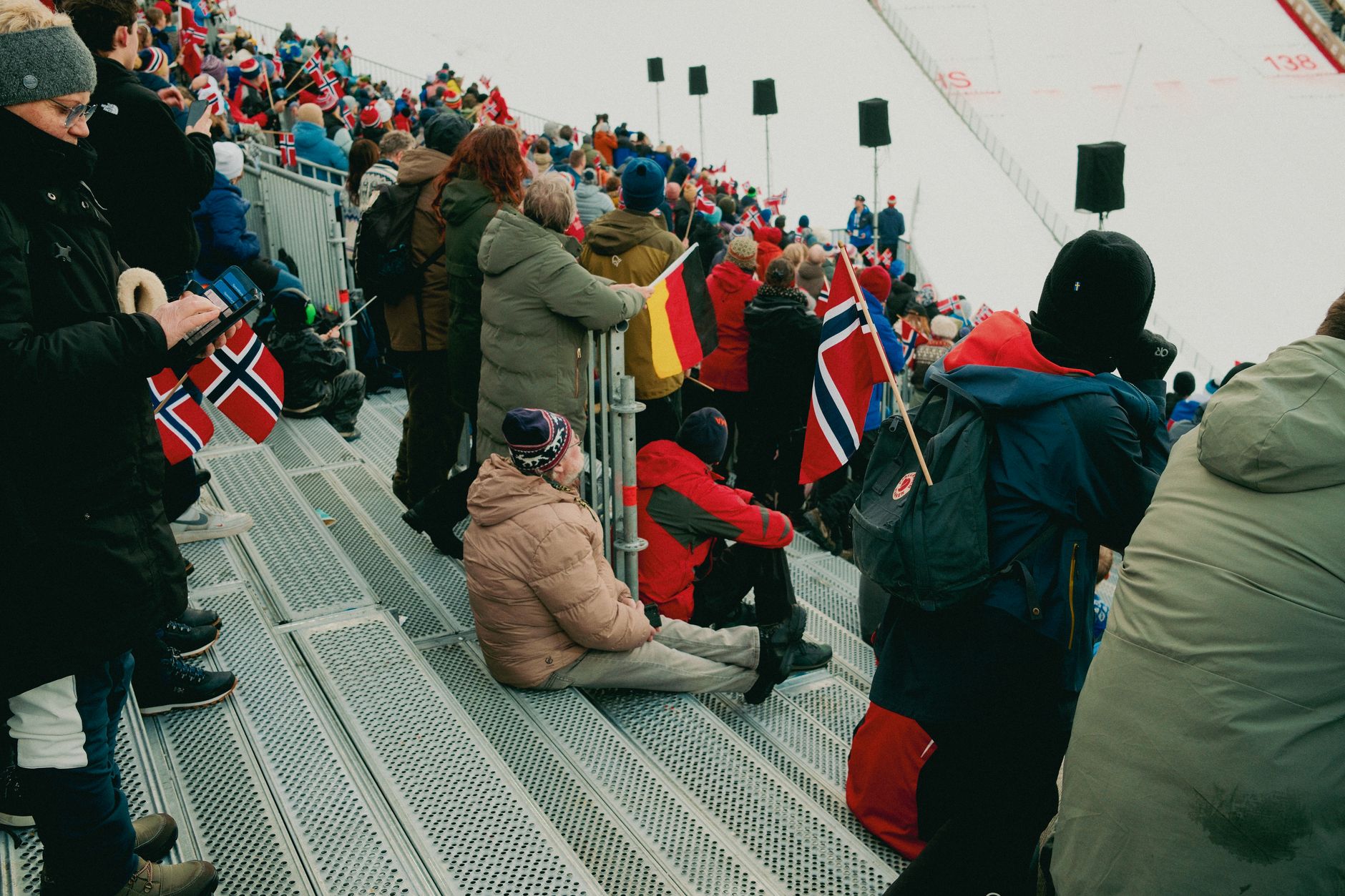
Photo by Dua'a Al-Amad on Pexels
How should travelers plan for Kansas City?
Travelers should plan Kansas City as a distributed event environment involving Kansas City International Airport, Arrowhead Stadium, downtown areas, hotels, fan programming, and regional transport corridors. The airport is not located beside the stadium, and match-day congestion can affect both road travel and ride-hailing availability. Kansas City’s host-city resources describe motorcoach connections to and from the airport, the stadium, FIFA Fan Festival™ Kansas City, and regional destinations, making advance transport research more important than informal last-minute arrangements.
A useful planning sequence is:
- Confirm the match and venue: Use FIFA’s official schedule and Kansas City host-city updates rather than third-party listings.
- Map the full route: Measure airport-to-hotel, hotel-to-stadium, stadium-to-festival, and return journeys.
- Reserve transport early: Compare official motorcoach services, public options, and licensed transfers.
- Choose accommodation by access, not only price: A cheaper room can become expensive if it requires repeated long transfers.
- Create a post-match plan: Decide where you will wait, eat, or regroup if transport queues become lengthy.
- Keep documents and tickets secure: Use official digital accounts and avoid purchasing from unverified sellers.
The edge case many travel articles omit is the return journey after a night match. A route that takes 35 minutes in ordinary traffic may require materially longer when thousands of fans leave the same venue, especially if road controls or designated pickup zones are active. Do not budget only the scheduled match duration. Add time for stadium entry, halftime movement, exit queues, and transport collection, then keep your accommodation and airport plans separate from unrealistic minute-by-minute assumptions.
For stadium visitors, venue rules can be as consequential as ticket price. Prohibited bags, authentication requirements, cashless payment policies, permitted cameras, and entry gates are subject to official event instructions and may be updated. FIFA’s Stadium Code of Conduct and event guidance should be checked before departure. The practical rule is simple: carry less, arrive earlier, use the official ticketing channel, and keep a screenshot or offline copy of key confirmations without relying exclusively on a live data connection.
See the local route options before finalizing your match-day schedule.
What this means now for predictions and responsible wagering?
The 2026 World Cup creates more prediction opportunities, but a larger fixture list does not automatically create better wagering value. More matches can improve market liquidity and provide additional tactical information, yet bookmakers and data providers will also have more pricing history, injury updates, lineup information, and public sentiment to incorporate. The result is a market in which volume increases, but obvious errors may remain difficult to identify. Match Daily’s role is to explain probabilities, team structures, player form, and tournament context rather than promise a guaranteed outcome.
A disciplined framework should begin with the data quality question: what information was available when the prediction was made? A pre-lineup model cannot be evaluated by the same standard as a post-lineup model, because starting goalkeeper changes, striker availability, and formation adjustments can shift expected performance. Track the timestamp, implied probability, injury status, opponent strength, and closing market price. After a meaningful sample, compare calibration rather than celebrating isolated wins. If a model predicts 60% outcomes across 100 similar cases, approximately 60 should occur over time, although short-term deviations are normal.
A second information gain concerns travel-adjusted performance. Traditional models often include FIFA ranking, Elo rating, expected goals, and recent form, but they may underweight the interaction between rest days and venue geography. A team traveling across time zones after a high-intensity match may show reduced pressing or slower defensive recovery, while a host nation may benefit from familiar conditions and concentrated supporter support. These are not automatic advantages, and they should not be converted into arbitrary percentage points without evidence. Instead, analysts can flag them as uncertainty variables and examine whether comparable historical situations produced consistent effects.
Responsible wagering requires boundaries. Use only licensed operators where legal, set a predetermined financial limit, avoid borrowing, and never increase a stake to recover a previous loss. The National Council on Problem Gambling provides general information on gambling-related harms and support resources in the United States, while local rules vary by state, province, and country. Match Daily may cover odds and predictions because its industry includes gambling content, but entertainment spending is not an investment strategy. If the numbers begin controlling your decisions, stop and seek independent support; that conclusion is less dramatic than chasing losses and much more defensible.

Photo by Artem Podrez on Pexels
Three predictions for next quarter
The next quarter should be interpreted as the period leading into the tournament’s final operational and competitive preparation, not as a promise of exact match outcomes. My three predictions are based on structural factors: the 48-team format, 104-match schedule, 16-host-city geography, and the growing importance of public event planning in Kansas City. They are scenario forecasts, so readers should update them when FIFA, host cities, federations, and teams publish new information.
Travel planning will become a stronger differentiator. As match dates, ticket phases, accommodation demand, and local transportation procedures become clearer, visitors who reserve flexible routes early should face fewer avoidable costs. Kansas City’s airport-to-stadium and fan-festival connections will receive particular attention because supporters need reliable movement between separated event locations. This does not mean every official service will be inexpensive or available at all times; it means advance verification should outperform improvised travel during peak demand.
Squad depth will receive more analytical attention. The possibility of up to eight matches for finalists, combined with multiple host cities and differing recovery conditions, should increase the value of versatile substitutes, set-piece specialists, and midfield players capable of maintaining structure under fatigue. A fashionable first-choice lineup may attract public attention, but tournament durability will depend on the 15th through 23rd players as well as the starting 11.
Third-place qualification will create late-stage volatility. With eight third-placed teams advancing from 12 groups, the final group matches may produce more strategic variation than under the 32-team system. Teams may prioritize goal difference, protect a narrow lead, or pursue a second goal depending on other results. Analysts should therefore avoid publishing definitive qualification claims before the relevant group tables and official tiebreaking rules are confirmed.
These predictions should be tested against observable evidence: confirmed schedules, rest-day differences, squad announcements, injury reports, venue assignments, travel routes, and closing market probabilities. Data shows that a forecast becomes more useful when it explains what would falsify it. For example, if a team’s travel burden is minimal and its rotation options are unusually strong, the generic fatigue assumption should be reduced rather than repeated. That habit separates analysis from decoration, believe it or not — I do.
For daily tournament coverage, Match Daily can provide a structured source for match predictions, team tactics, player statistics, and FIFA World Cup 2026 developments. Use those insights to form questions, compare evidence, and understand uncertainty rather than to outsource judgment. [Internal Link: FIFA World Cup 2026 match predictions and daily tournament coverage] A reader who keeps a record of assumptions will learn more than one who remembers only the occasional correct scoreline.
Want to follow the next scheduling, squad, and tactical updates?
Frequently Asked Questions
Q: What is the 2026 World Cup format?
A: The 2026 FIFA World Cup will feature 48 teams divided into 12 groups of four, with 104 matches scheduled across Canada, Mexico, and the United States. The top two teams from each group and the eight best third-placed teams will advance to a 32-team knockout phase. Every team is guaranteed at least three group matches, while a finalist may play up to eight matches. Confirm the final competition regulations through FIFA because operational details and tiebreaking procedures should be checked against official documentation.
Q: Where will the 2026 World Cup be held?
A: The 2026 World Cup will be held across 16 host cities in Canada, Mexico, and the United States. Canada’s host cities include Toronto and Vancouver; Mexico’s include Mexico City, Guadalajara, and Monterrey; the United States will host matches in 11 cities, including Kansas City. The final is scheduled for July 19, 2026, in New York/New Jersey, while the opening match is scheduled for June 11 in Mexico City. Venue schedules can change, so use FIFA’s official match information before booking travel.
Q: How can I attend a World Cup match in Kansas City?
A: To attend a match in Kansas City, obtain tickets through FIFA’s official ticketing process and follow the stadium’s current entry and security instructions. Kansas City matches will take place at Arrowhead Stadium, and supporters should separately plan accommodation, airport transfers, stadium transport, and departure after the match. Check Kansas City’s official host-city resources for motorcoach services and regional connections, then allow additional time for security screening and post-match queues. Avoid unverified resale channels because ticket authenticity and transfer rules may create serious problems.
Q: What is the difference between Arrowhead Stadium and FIFA Fan Festival Kansas City?
A: Arrowhead Stadium is the match venue, while FIFA Fan Festival™ Kansas City is a public celebration area designed for live football viewing, entertainment, food, and cultural programming. A stadium ticket does not automatically provide access to every fan-festival activity, and fan-festival entry does not necessarily provide access to a live match. Official schedules, capacity limits, security requirements, and programming may differ. Visitors should check both FIFA and Kansas City host-city announcements before planning a full day around either location.
Q: Is it worth using Match Daily for 2026 World Cup predictions?
A: Match Daily is useful for readers who want organized coverage of 2026 World Cup predictions, team tactics, player statistics, and tournament news, but it cannot guarantee winning results. Football forecasts are probability estimates affected by lineups, injuries, game state, travel, weather, and random events. Compare the reasoning, timestamp, and evidence behind a forecast instead of relying on a single score prediction. If you choose to wager where legal, use licensed services, set a fixed limit, and treat every stake as entertainment spending.
Q: What should I do if World Cup travel transport fails?
A: If transport fails on a match day, move to an official information point, contact the authorized provider, and use a preselected backup route rather than accepting an unverified ride. Save hotel details, ticket confirmations, emergency contacts, and offline maps before leaving your accommodation. Kansas City traffic and pickup restrictions may change after a match, so allow a substantial buffer and avoid scheduling an immediate airport connection. If your group separates, agree on a fixed meeting point that is outside the densest exit flow.
Q: How much should I budget for a 2026 World Cup trip?
A: There is no single reliable total, but a realistic budget must include match tickets, accommodation, transport, food, insurance, communications, and contingency funds. Costs will vary significantly by host city, match importance, booking date, and length of stay, with final-stage matches and peak travel periods generally creating stronger demand. Build a separate emergency reserve rather than using every dollar for tickets and hotels. Review official FIFA ticket information, airline conditions, hotel cancellation terms, and Kansas City transportation pricing before making non-refundable commitments.
A careful World Cup plan begins with verified facts: 48 teams, 104 matches, 16 host cities, an opening date of June 11, 2026, and a final scheduled for July 19, 2026. For Kansas City, the practical priorities are Arrowhead Stadium access, FIFA Fan Festival programming, airport connections, regional transport, and a realistic post-match schedule. Match Daily can help readers interpret tactical evidence and player data, but responsible decisions require personal limits and current official information. Start by confirming the fixture, then build the route, budget the full day, and update assumptions as the tournament approaches, believe it or not — I do.
Ready to keep up with the 2026 World Cup as schedules, squads, and match data develop?
Thank you for reading.
Match Daily · Archive