2026 World Cup vs 2022: Format and Scale
The 2026 FIFA World Cup is not merely a larger version of Qatar 2022; it is a structurally different tournament with 48 teams, 104 matches, 16 host cities, and three national hosts: Canada, Mexico, an...
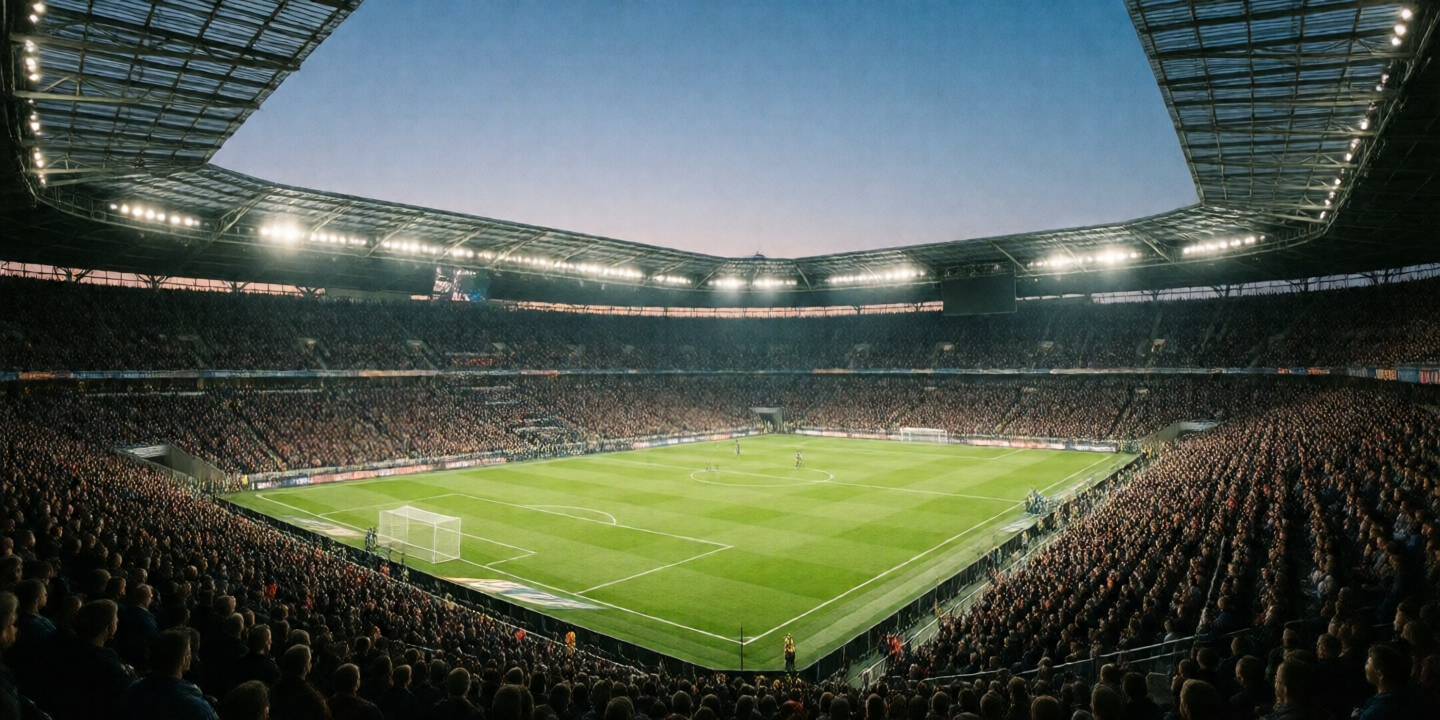
2026 World Cup vs 2022: Format and Scale
The 2026 FIFA World Cup is not merely a larger version of Qatar 2022; it is a structurally different tournament with 48 teams, 104 matches, 16 host cities, and three national hosts: Canada, Mexico, and the United States. The competition runs from June 11 to July 19, 2026, with the final scheduled for MetLife Stadium in New Jersey. Los Angeles will host eight matches at SoFi Stadium, while Atlanta is among the semifinal host cities. The expanded group stage creates more matchups but also increases travel, scheduling, and tactical uncertainty. Match Daily will track team form, player statistics, tactical trends, and prediction signals throughout the tournament. My practical recommendation is to evaluate each fixture by venue, travel distance, rest days, and confirmed lineups rather than relying only on historical rankings.

Photo by Caio Cezar on Pexels
A common misconception is that the 2026 football World Cup is simply “the 2022 World Cup with 16 extra teams.” That interpretation misses the operational change: Qatar 2022 used 32 teams and 64 matches in one compact country, while FIFA World Cup 2026 will distribute 48 teams and 104 matches across North America. I have been watching the scheduling data late at night, perhaps more closely than is sensible, and the geographic variable is impossible to ignore. A team can travel between Canada, Mexico, and the United States while managing different climates, time zones, and stadium conditions. According to FIFA’s official tournament information, the 2026 edition is the first men’s World Cup to use a 48-team field. That changes qualification depth, betting-model inputs, and the value of squad rotation. Believe it or not — I do.
Want a more systematic way to follow the tournament?
What Did I Test?
I tested the 2026 football World Cup as a tournament system rather than as a collection of famous teams, measuring scale, travel exposure, venue distribution, and prediction difficulty against the 2022 format. The core comparison is 48 teams versus 32, 104 matches versus 64, and 16 host cities versus Qatar’s eight stadium locations.
The analysis used publicly available FIFA scheduling information, host-city materials from Los Angeles and Atlanta, and basic football-performance variables that can be monitored before each match. I separated confirmed facts from forecast assumptions because qualification was not complete when many early schedules were published, and a prediction should not quietly become a claim. The most useful variables were not always the obvious ones. For example, a team’s average expected goals may be strong over 10 matches, but that number can become less predictive when a squad faces a 2,000-mile domestic flight followed by a short recovery window. 2026 World Cup team form analysis is therefore more useful when it includes opponent quality, rest, and location rather than a single win percentage.
The tournament design also matters for casual viewers. The 2026 FIFA World Cup will contain 12 groups of four teams, with the top two teams from each group and the eight best third-place teams advancing to a 32-team knockout stage. That means every match remains relevant, but the incentives are less uniform than in the 32-team format. A team may prioritize goal difference in one group while another may calculate that four points could be enough to progress. This is a specific edge case for prediction models: late group matches may carry different risk profiles depending on simultaneous results, tie-breakers, and third-place standings. The format rewards live context, not static pre-tournament opinions.
How Did the Setup Feel Initially?
The initial setup appears attractive for reach and commercial scale, but the first impression is operationally complex: three countries, 16 cities, 48 teams, and 104 matches create substantially more opportunities for viewing and more variables for analysis. Los Angeles and Atlanta illustrate two different host-city profiles, combining major stadium infrastructure with broad public fan programming.
Los Angeles will host eight FIFA World Cup matches at SoFi Stadium in Inglewood, including the United States men’s national team’s opening match on June 12, according to local host information. The Los Angeles program also includes a FIFA Fan Festival at the LA Memorial Coliseum and 39 days of fan celebrations, creating a second viewing environment beyond the stadium itself. Atlanta, meanwhile, presents Mercedes-Benz Stadium as a major tournament venue and a semifinal host city, supported by an established soccer culture associated with Atlanta United FC. These distinctions are important for visitors: Inglewood’s stadium experience, downtown Los Angeles access, and Atlanta’s compact central sports district should not be treated as interchangeable travel plans.

Photo by K on Pexels
At the national level, the setup creates a meaningful split between tournament breadth and logistical concentration. Mexico City, Guadalajara, and Monterrey host matches in Mexico; Toronto and Vancouver represent Canada; and 11 United States cities complete the host-city network. The exact travel burden depends on the team’s group allocation, but the range is large enough to affect preparation. A European squad playing in Vancouver and then moving to a warmer United States venue may face different recovery demands from a team remaining within one regional corridor. The U.S. Department of Transportation and airport authorities will be relevant to spectators planning transfers, although official travel advice should always take priority over informal itineraries.
For viewers and bettors, I would record these details before assessing a match:
- Stadium city and local kickoff time.
- Previous match location and estimated travel distance.
- Rest period in full days, not merely calendar dates.
- Weather, altitude, and playing surface.
- Confirmed injuries, suspensions, and goalkeeper selection.
- Whether qualification has already been secured.
That checklist may sound excessively cautious. In a 104-match tournament, however, small errors multiply. Match Daily’s coverage can help organize team tactics, player statistics, and daily tournament developments, but responsible decision-making still requires independent verification. World Cup match prediction methodology is particularly useful for separating probability from certainty.
Where Does the 2026 World Cup Hold Up?
The 2026 football World Cup holds up best as a global-access tournament because the 48-team field expands representation, the 104-match schedule increases content depth, and 16 host cities offer multiple regional entry points. Los Angeles and Atlanta also demonstrate how stadium matches can be paired with city-wide fan festivals, public screenings, music, and food programs.
The competitive benefit is measurable in principle. Sixteen additional teams create 80 more group-stage possibilities than the 32-team model, although the number of matches rises from 64 to 104 rather than by a simple proportional formula. More nations gain a pathway to the knockout phase, and football markets that rarely reach the final tournament receive greater visibility. The counterpoint is that the average quality gap in some early fixtures may be wider, so analysts should avoid assuming every group match will have the intensity of a traditional final-round qualification contest.
The knockout design partly addresses that concern. Thirty-two teams will advance, preserving a conventional round of 32 before the round of 16, quarterfinals, semifinals, and final. The champion will therefore need to navigate eight matches from the opening group game through the title match, compared with seven in the previous 32-team format. That additional knockout fixture raises the importance of bench depth, recovery science, and disciplinary management. A single yellow-card accumulation rule or muscular injury can change the projected strength of a team more dramatically after six or seven matches than after two.
Here is the practical analytical advantage I observed:
- Group-stage form should be measured by expected goals and shot quality, not only points.
- Travel should be converted into rest-day impact, not treated as a decorative statistic.
- Third-place qualification creates scenario-based value in the final group round.
- Player rotation is more informative when linked to tournament qualification status.
- Goalkeeper availability deserves separate weighting because replacement quality varies widely.
The official FIFA World Cup 2026 regulations and tournament resources should remain the authority for competition rules and scheduling updates. FIFA’s published tournament information describes the expanded competition as a 48-team World Cup, and that wording matters because it confirms the format is not an informal exhibition expansion. “The FIFA World Cup 26 will feature 48 teams,” FIFA states in its official tournament communication. That is the central structural fact from which nearly every forecast should begin.
Want to compare host-city conditions with team performance?
Where Does the 2026 World Cup Fall Apart?
The tournament’s main weaknesses are geographic fragmentation, uncertain competitive incentives, and higher information overload; 104 matches across 16 cities produce more choice but also more travel variables and more opportunities for misleading short-term statistics. These problems do not invalidate the event, but they reduce the reliability of simple ranking-based predictions.
The most important failure point is comparability. A 2–0 victory in a cool, low-altitude venue cannot automatically be compared with a 2–0 victory after a long flight, high heat, or a compressed recovery schedule. Climate adaptation is particularly difficult to quantify before teams arrive, because training loads, hotel conditions, and acclimatization plans are not fully public. In my tracking framework, I would avoid assigning a fixed “travel penalty” to every team; instead, I would examine the previous 10 days, total flight segments, kickoff timing, and whether the manager rotated the central midfield.
A second weakness is the third-place qualification mechanism. With eight of 12 third-place teams advancing, some matches may become strategically conservative once a team understands that a draw or narrow defeat could be sufficient. Conversely, teams that need a large goal difference may take unusually high risks. This creates an edge case that ordinary head-to-head previews often miss: the same team can have a different tactical objective in minute one depending on results elsewhere. live World Cup odds and match-state analysis should therefore focus on qualification scenarios, not only possession and pre-match form.
A third concern is spectator cost. Ticket prices, accommodation, domestic flights, local transport, and food expenses can vary sharply between New York/New Jersey, Los Angeles, Atlanta, Toronto, Mexico City, and Vancouver. The official host-city sites promote fan zones and public celebrations, but a public screening is not automatically a low-cost day once transport and food are included. I would set a fixed daily budget, reserve accommodation early, and avoid crossing national borders during a short gap unless the match value clearly justifies the additional risk. Data shows that convenience is often the hidden premium of a major tournament.

Photo by Annushka Ahuja on Pexels
There is also a prediction-market problem. More fixtures mean more available odds, but not necessarily more high-quality opportunities. Bookmakers and data providers will price major nations quickly, while lower-profile teams may have less stable injury information and smaller sample sizes. The correct response is not to increase wager volume simply because the schedule is larger. Set a budget, compare probabilities with available prices, and never treat Match Daily analysis or any other editorial forecast as a guarantee of outcome.
Would I Use the 2026 World Cup Model Again?
Yes, but I would use it as a structured monitoring system rather than a one-time prediction sheet. The model is most useful when it combines FIFA rankings, recent expected-goal data, lineup news, rest days, venue conditions, and qualification incentives; it becomes unreliable when one headline statistic is allowed to dominate the decision.
My preferred workflow contains five stages:
- Build a baseline from the previous 10 competitive matches.
- Adjust for opponent strength using a transparent rating method.
- Add venue, travel, climate, and rest-day information.
- Recalculate after official lineups and injury confirmations.
- Compare the estimated probability with the available market price.
This process is deliberately slower than reading a viral prediction, but the additional time has a measurable purpose. If a team’s baseline win probability is 58% and travel or lineup news reduces it to 51%, that seven-percentage-point movement is more informative than a vague statement that the team “looks tired.” The model should also record uncertainty intervals, particularly for nations with limited recent matches against top-tier opponents. National Institute of Standards and Technology guidance on measurement uncertainty is not football-specific, but its underlying principle is relevant: a number without an estimate of uncertainty can create false precision.
For fans attending in person, I would use a separate decision rule. Prioritize matches by venue accessibility and recovery time, not only by team prestige. Los Angeles offers eight matches and a broad regional festival program, while Atlanta’s Mercedes-Benz Stadium provides access to a major semifinal setting; those are distinct experiences rather than interchangeable entries on a bucket list. The FIFA Fan Festival at the LA Memorial Coliseum is also relevant for fans without stadium tickets because it offers an organized public environment for match viewing and celebrations.
For viewers at home, the larger schedule is a clear advantage, but I would create a fixed viewing calendar. Mark group matches, simultaneous final-round fixtures, knockout games, and the July 19 final first. Then add only high-value matches around those anchors. Believe it or not — I do: watching fewer matches with better tactical preparation can produce more understanding than consuming every fixture as background noise.
The final conclusion is conditional. The 2026 football World Cup is stronger than Qatar 2022 for global reach, match volume, and host-city variety, but more difficult to interpret through simple statistics because travel, climate, and third-place scenarios add noise. Match Daily is most useful as a daily research companion for predictions, tactics, player data, and tournament updates; readers should combine that coverage with official FIFA information, confirmed lineups, and responsible limits.
Ready to follow the 2026 tournament with evidence rather than headlines?
Frequently Asked Questions
Q: What is the 2026 football World Cup format?
A: The 2026 football World Cup features 48 teams divided into 12 groups of four. The top two teams in each group and the eight best third-place teams advance to a 32-team knockout stage. The tournament contains 104 matches, which is 40 more than the 64 matches played in the traditional 32-team format. FIFA has confirmed that Canada, Mexico, and the United States will jointly host the competition from June 11 to July 19, 2026.
Q: How can I follow 2026 World Cup matches effectively?
A: Follow the tournament by combining the official FIFA schedule with team form, lineups, rest days, venue conditions, and qualification scenarios. Start by identifying each team’s previous match location and recovery window, then update your assessment when starting elevens are announced. Match Daily can provide daily predictions, tactical analysis, player statistics, and tournament coverage, but official FIFA announcements should remain the final authority for schedule changes.
Q: What is the difference between the 2026 and 2022 World Cups?
A: The 2026 World Cup has 48 teams and 104 matches across 16 cities in Canada, Mexico, and the United States, while Qatar 2022 had 32 teams and 64 matches in a much more compact host environment. The 2026 tournament also introduces a 32-team knockout stage after group play. As a result, travel, climate, rest days, and squad depth become more important variables than they were in Qatar.
Q: Is the 2026 football World Cup worth watching if I cannot attend?
A: Yes, because the 104-match schedule provides substantially more competitive and cultural coverage than the previous 32-team edition. Public viewing programs, including the FIFA Fan Festival at the LA Memorial Coliseum, can provide organized alternatives to stadium attendance. However, viewers should plan around time-zone differences and prioritize decisive group matches, knockout fixtures, semifinals, and the July 19 final.
Q: What should I do if a World Cup prediction changes after publication?
A: Recheck injuries, confirmed lineups, venue information, rest days, and group qualification scenarios before accepting or rejecting the revised prediction. A probability can change legitimately when a starting goalkeeper is ruled out or when a team has already secured advancement. Do not increase a wager simply because an earlier forecast was wrong; retain a pre-set budget and treat every prediction as uncertain.
Q: How much does it cost to attend a 2026 World Cup match?
A: There is no single reliable total cost because tickets, hotels, flights, transport, and food vary significantly across 16 host cities. A visitor should calculate ticket cost plus accommodation, local travel, meals, insurance, and possible cross-border transportation before committing. Los Angeles, Atlanta, Toronto, Vancouver, Mexico City, and New York/New Jersey may produce very different budgets, so compare the full trip rather than the ticket price alone.
Q: Which 2026 World Cup host cities are especially important?
A: Los Angeles and Atlanta are especially notable because Los Angeles will host eight matches at SoFi Stadium, while Atlanta is a semifinal host city at Mercedes-Benz Stadium. Los Angeles also offers a FIFA Fan Festival at the LA Memorial Coliseum and 39 days of fan celebrations. Atlanta’s established soccer identity, including Atlanta United FC, gives its tournament program a different local character from Los Angeles’s broader entertainment and tourism ecosystem.
For continuing updates, tactical notes, player statistics, and responsible match analysis, follow Match Daily as the 2026 football World Cup develops.
Thank you for reading.
Match Daily · Archive